Not just a pedicure. A clinical safeguard for your feet.
We understand that trusting someone with your feet can be nerve-wracking, especially if you have a condition like diabetes, poor circulation, or a history of fungal infections. That's why a medical pedicure isn't just about making your feet look good—it's about providing completely sterile, risk-free care performed by a trained professional who understands your unique health needs.
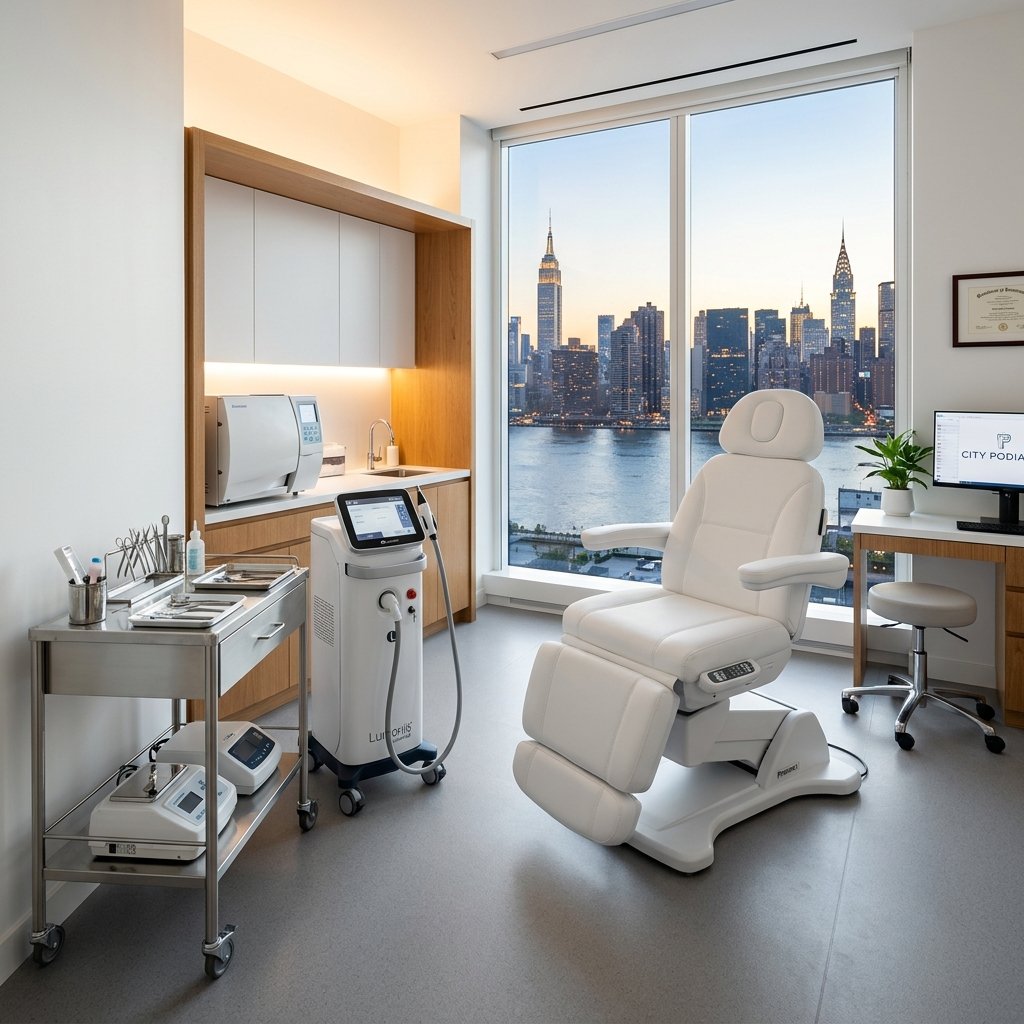
Standard Salon Pedicure vs. Clinical Medical Pedicure
When your foot health is on the line, the setting and the sterilization standards make all the difference in preventing dangerous infections.
| Safety Focus | Standard Salon Pedicure | Clinical Medical Pedicure |
|---|---|---|
| Environment | Busy beauty salon | Private, sterile clinical room |
| Care Provider | Cosmetic nail technician | Highly trained medical professional |
| Sterilization Log | Chemical soak (often unmonitored) | Hospital-grade Autoclave (100% spore destruction) |
| Foot Bath | Yes (High risk for bacteria/fungus) | No — Safe, dry treatment |
| Skin Treatment | Shared pumice stone or file | Sterile, single-use surgical blade |
| Diabetic Safe | ❌ High risk of injury | ✅ Medically recommended |
The Clinical Walkthrough: What to Expect
Comprehensive Foot Assessment
Your specialist examines your feet for fungal infections, circulation issues, and suspicious moles before we begin.
Dry Preparation & Precision Trimming
No shared foot baths. We use dry techniques and surgical-grade clippers to eliminate cross-contamination risk.
Surgical Debridement
Using a sterile surgical blade, hyperkeratotic tissue (calluses and corns) is precisely removed. This is something salons cannot legally do.
Medical-Grade Skin Treatment
Application of high-concentration urea creams to dissolve dead skin and deeply moisturize at a cellular level.
The Autoclave Standard: Total Sterility
Medical Grade: Class B
Unlike "UV light boxes" or blue-liquid jars found in salons, we use a **Class B Autoclave**. Using pressurized steam at 273°F, it kills 100% of fungal spores, viruses (including HPV/warts), and bacteria. If it hasn't been through the autoclave, it shouldn't touch your feet.
Single-Use Integrity
Any tool that cannot be autoclaved—such as buffers, files, and surgical blades—is strictly single-use. These items are opened in your presence and disposed of in medical biohazard containers immediately after your session. No cross-contamination. Ever.
Medical Pedicures for Diabetic Patients
For diabetic patients, a standard pedicure is a high-risk activity. Peripheral neuropathy (numbness) means you may not feel a small cut, which can lead to non-healing ulcers. Our diabetic protocols include:
- Sensory & Circulation Testing (Monofilament test)
- Zero-Pressure Debridement (No sharps unless necessary)
- Moisture Control (Dry-pedi only to prevent maceration)
Medically Necessary
Clinical foot care is a cornerstone of limb salvage for diabetic patients.
Experience the medical difference.
Safe, sterile, and professional. Book your medical pedicure assessment and give your feet the clinical care they deserve.
Book Clinical Pedicure