Essential Medical Pedicure & Foot Care Guides
Medical Pedicure vs. Salon Pedicure
Discover the hidden bacterial and fungal risks in salon foot whirlpools vs autoclave standards.
How Much Does a Medical Pedicure Cost in NYC?
Transparent out-of-pocket pricing ($150–$250), insurance copays, and FSA/HSA reimbursement.
Diabetic Foot & Toenail Care: 5 Rules
Preventing ulcers, neuropathy complications, and accessing Medicare-covered debridement.
Why Podiatrists Use Waterless Pedicures
The dermatology behind dry debridement: stopping nail splitting and zero waterborne biofilm.
Can I Get a Pedicure If I Have Toenail Fungus?
Overcoming salon refusal: private clinical suites and judgment-free medical foot restoration.
Can Diabetics Get a Normal Salon Pedicure?
Why metal callus graters and whirlpool tubs trigger limb-threatening diabetic foot infections.
Senior Toenail Care: Managing Thick & Difficult Nails
Caregiver protocol for tough ram's horn nails in aging parents with Medicare-covered podiatric debridement options.
Not just a pedicure. A clinical safeguard for your feet.
We understand that trusting someone with your feet can be nerve-wracking, especially if you have diabetes, poor circulation, or a history of fungal infections. A medical pedicure isn't just about making your feet look presentable—it provides sterile, risk-free care performed by trained professionals who understand your specific health needs.
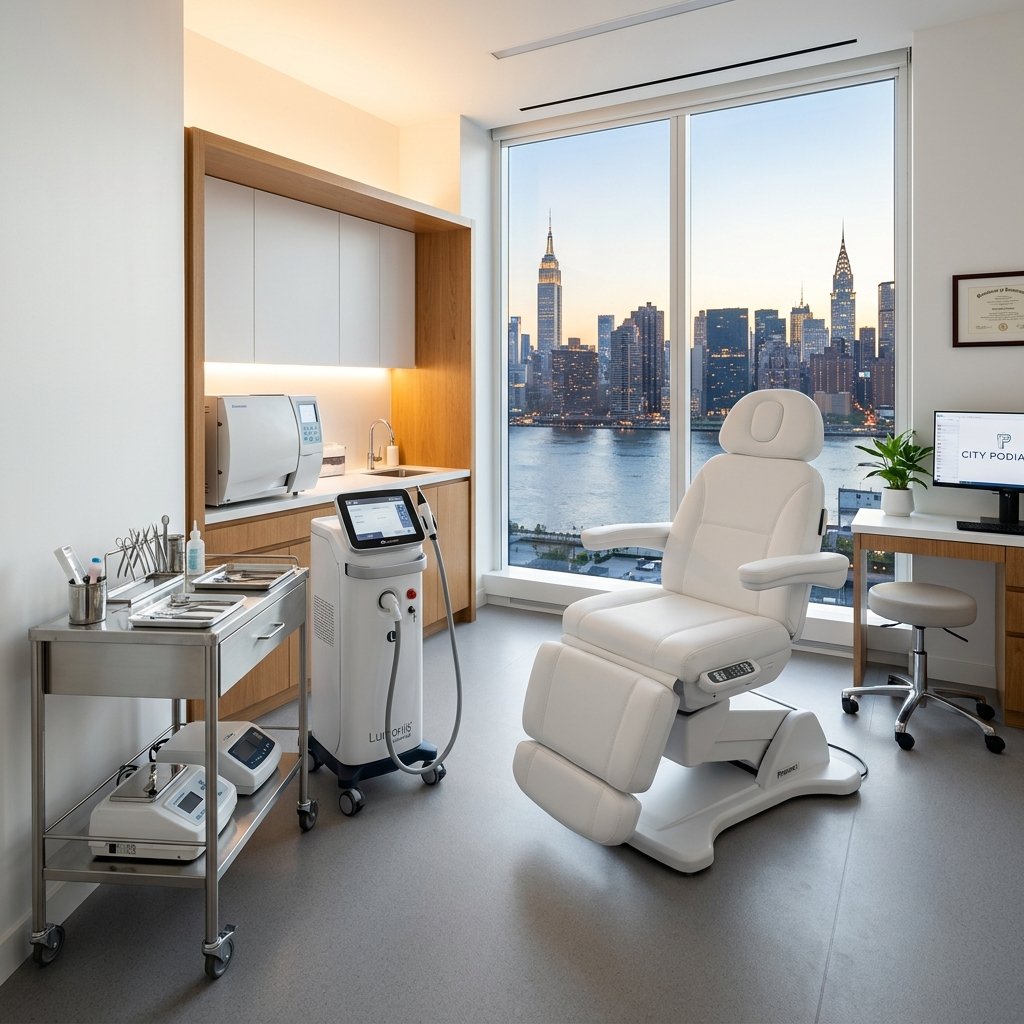
Standard Salon Pedicure vs. Clinical Medical Pedicure
When your foot health is on the line, hospital-grade sterilization standards make all the difference in preventing severe bacterial and fungal infections.
| Safety Parameter | Standard Salon Pedicure | Clinical Medical Pedicure |
|---|---|---|
| Environment | Busy commercial beauty salon | Private, sterile clinical operatory |
| Care Provider | Cosmetic nail technician | Medical podiatrist or certified specialist |
| Sterilization Protocol | Chemical disinfectant soak (Barbicide) | Hospital-grade Autoclave (100% spore kill) |
| Whirlpool Foot Bath | Yes (High biofilm & pathogen risk) | No — 100% Waterless, sterile dry care |
| Callus & Skin Treatment | Shared pumice stone or metal rasp | Sterile, single-use surgical debridement |
| Diabetic & Neuropathy Safe | High risk of laceration & ulceration | Medically indicated & recommended |
The Clinical Walkthrough: What to Expect
Comprehensive Diagnostic Foot Assessment
Your specialist examines your feet for fungal pathogens, vascular sufficiency, neurological sensations, and abnormal lesions before treatment begins.
Waterless Antiseptic Prep & Precision Trimming
Zero shared foot whirlpools. We use antimicrobial mists and autoclaved surgical nippers to trim nails anatomically straight, preventing ingrown spikes.
Rotary & Surgical Callus Debridement
Using vacuum-integrated podiatry drills and single-use surgical blades, thick hyperkeratotic tissue, corns, and cracked heel calluses are painlessly removed.
Medical-Grade Keratolytic Hydration
Application of 40% clinical urea formulas to dissolve stubborn dead keratin layers and restore deep cellular skin barrier moisture.
The Autoclave Standard: Total Sterility
Medical Grade: Class B Autoclave
Unlike "UV light boxes" or blue-liquid jars found in nail salons, we use a Class B Hospital Autoclave. Using pressurized steam at 273°F (134°C), it completely destroys 100% of fungal spores, bacterial endospores, and viral particles (including HPV plantars warts). If an instrument hasn't emerged from an autoclave pouch, it never touches your skin.
Single-Use Medical Integrity
Any consumable tool that cannot withstand high-temperature autoclaving—such as sanding caps, disposable blade handles, and nail buffers—is strictly single-use. Instruments are unwrapped directly in front of you and immediately disposed of in certified biohazard receptacles following OSHA protocols.
Medical Pedicures for Diabetic & High-Risk Patients
For diabetic patients, a standard salon pedicure is a clinically documented high-risk activity. Peripheral neuropathy (loss of sensation) means micro-cuts from credo blades or pumice stones often go unnoticed, rapidly escalating into infected diabetic foot ulcers. Our specialized clinical protocols include:
- Semmes-Weinstein monofilament sensation & pedal pulse evaluation
- Zero-pressure mechanical debridement without sharp scalpel risks
- 100% waterless protocol eliminating bacterial tissue maceration
Medically Indicated
Routine clinical podiatry care is a cornerstone of limb preservation for diabetic patients.
Experience the Medical Difference
Sterile, safe, and judgment-free clinical foot care. Schedule your medical pedicure with our board-certified NYC specialists today.
Book Clinical Pedicure on ZocdocFrequently Asked Questions
Q How is a medical pedicure different from a regular salon pedicure?
Q Is a medical pedicure covered by Medicare or private health insurance?
Q How long does a clinical medical pedicure session take?
Q Can I wear nail polish after a medical pedicure?
Q Why do podiatrists advise against whirlpool foot baths in nail salons?
Related Clinical Analysis
Medical vs Salon Pedicure
Why sterile autoclaves protect feet.
Medical Pedicure Cost NYC
Transparent NYC pricing and FSA/HSA guide.
Toenail Fungus Hub
Why medical pedicures are essential for fungal management.
Nail Disorders Encyclopedia
Identifying nail changes during your clinical pedicure.
Diabetic Foot Care
Specialized protocols for high-risk patients.