You can walk immediately after an in-office ingrown toenail surgery. To your appointment, wear an open-toed sandal, adjustable slide, or wide-toe-box loose sneaker to accommodate the bulky sterile bandage. Most patients transition back into standard running sneakers within 24 to 48 hours, and can resume dress shoes or athletics within 1 to 2 weeks.
The #1 Anxiety: "Will I Be Stuck in Bed Unable to Walk?"
One of the primary reasons working New Yorkers, students, and busy parents delay getting an ingrown toenail permanently fixed is the fear of immobility: Will I need time off work? Will I have to limp down subway stairs? What shoes will I even be able to wear?
Let us clear up this misconception immediately: A partial nail matrixectomy is an outpatient procedure that requires zero bed rest. You walk into the clinic, the doctor numbs the toe, removes the offending border, cauterizes the root, applies a sterile dressing, and you walk right out the front door.
What to Wear to Your Appointment (The Post-Op Dressing Factor)
Immediately following the procedure, your podiatrist will apply an antibiotic ointment, a non-stick sterile Telfa pad, and wrap the big toe in a protective gauze dressing. While this dressing is soft and lightweight, it adds roughly one half-inch of bulk around your toe.
For your appointment, follow these footwear rules:
- Best Choice: Open-toed slide, Birkenstock, adjustable velcro sports sandal, or Croc.
- Acceptable Choice: A roomy athletic sneaker with the laces loosened all the way down to the toe box.
- Worst Choice (Do NOT Wear): Pointed dress shoes, tight Oxford dress shoes, cowboy boots, or high heels.
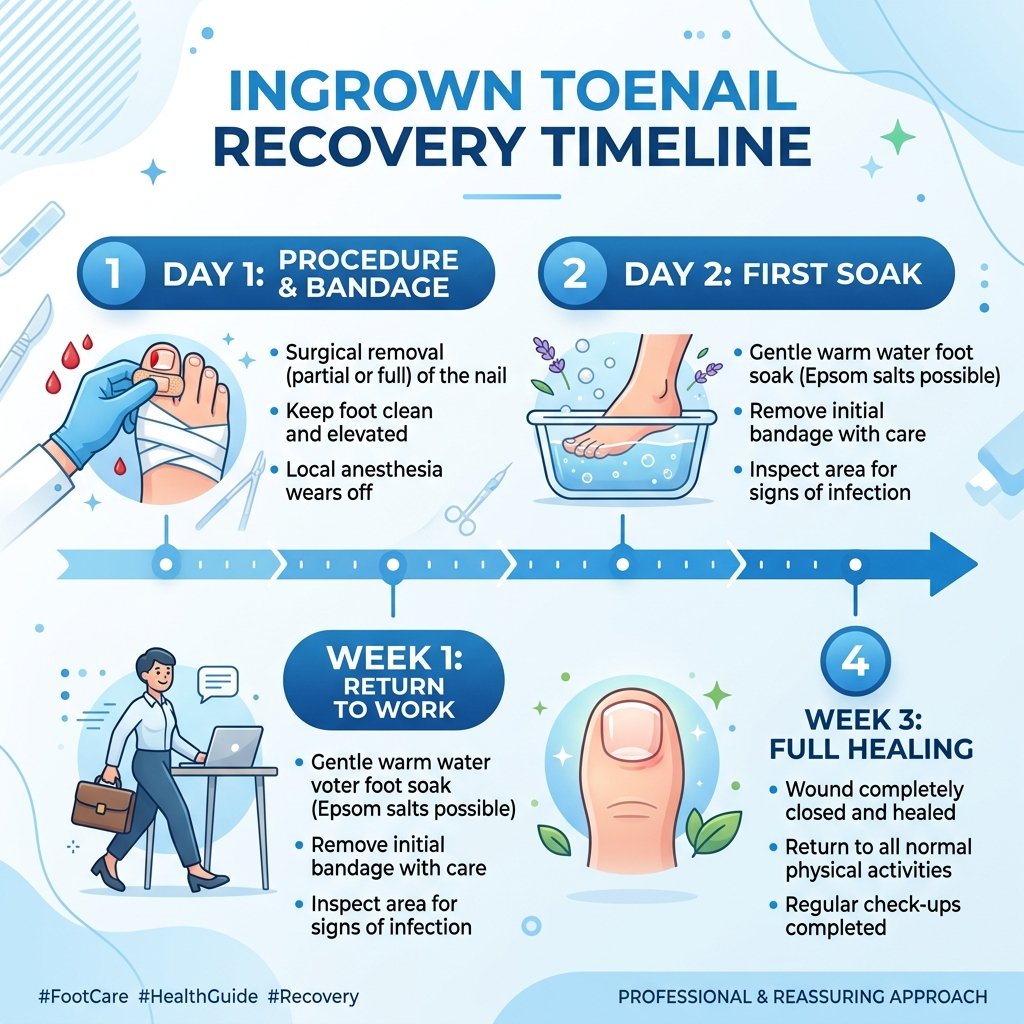
Day-by-Day Footwear Recovery Timeline
Here is what your recovery footwear schedule looks like:
Day 1 (Procedure Day)
Keep the original bulky bandage clean and dry. Wear a roomy sandal or loose sneaker. Elevate your foot when relaxing at home.
Days 2 to 7 (Band-Aid Phase)
Remove the bulky bandage. After a quick warm water soak, apply a thin layer of antibiotic ointment and a standard small Band-Aid. You can now easily wear standard sneakers, comfortable loafers, or casual footwear to work.
Day 14 Onward (Full Footwear Freedom)
The surgical site has fully epithelized. You can resume running shoes, athletic cleats, pointed dress shoes, and heels with zero restriction.
The 3 Biggest Post-Op Footwear Mistakes to Avoid
While recovery from a partial matrixectomy is remarkably fast, making poor footwear choices during the first 7 days can cause unnecessary irritation and delay epithelial healing. Avoid these common mistakes:
- Mistake 1: Wearing Tight Compression Socks: Tight synthetic socks squeeze the dressing tightly against the raw nail groove. Opt for loose 100% cotton socks or diabetic seamless socks during Week 1.
- Mistake 2: Walking Barefoot on Floors: Never walk barefoot inside your home or in public gym showers while recovering. Bare feet expose the healing nail sulcus to floor dust, pet dander, and bathroom bacteria. Always wear clean indoor slides.
- Mistake 3: Shoving Your Foot into Stiff Loafers Too Early: Even if your toe feels 100% painless on Day 3, the deep matrix tissue is still undergoing chemical cauterization remodeling. Avoid stiff leather shoes until Day 7 to 10.
When Can Athletes Resume High-Impact Cleats and Running Shoes?
Marathoners, soccer players, and dancers can typically return to standard running sneakers with loose lacing by Day 3 to 4, and resume tight athletic cleats or pointe shoes by Day 10 to 14 after a follow-up evaluation.
Fast Relief with Zero Extended Downtime
Walk in, get permanent relief in 15 minutes, and walk out on your own feet. Find top-rated NYC podiatrists on Zocdoc today.
Related Clinical Resources
Patient Frequently Asked Questions
Q Can I drive home after ingrown toenail surgery?
Q When can I wear regular running sneakers again?
Q When can women wear high heels or pointed-toe dress shoes again?
Q Do I need crutches or a medical walking boot?
Q When can I resume running, gym workouts, or swimming?
Related Clinical Topics
Does Numbing Hurt?
What the 5-second gentle numbing injection really feels like.
Surgical Matrixectomy Guide
Complete walkthrough of the permanent 15-minute in-office procedure.
NYC Podiatry Directory
Connect with top-rated NYC toenail surgeons on Zocdoc.