Can You Share Nail Clippers?
Find a Podiatrist Near You
Get same-day appointments with verified podiatrists. Insurance accepted.
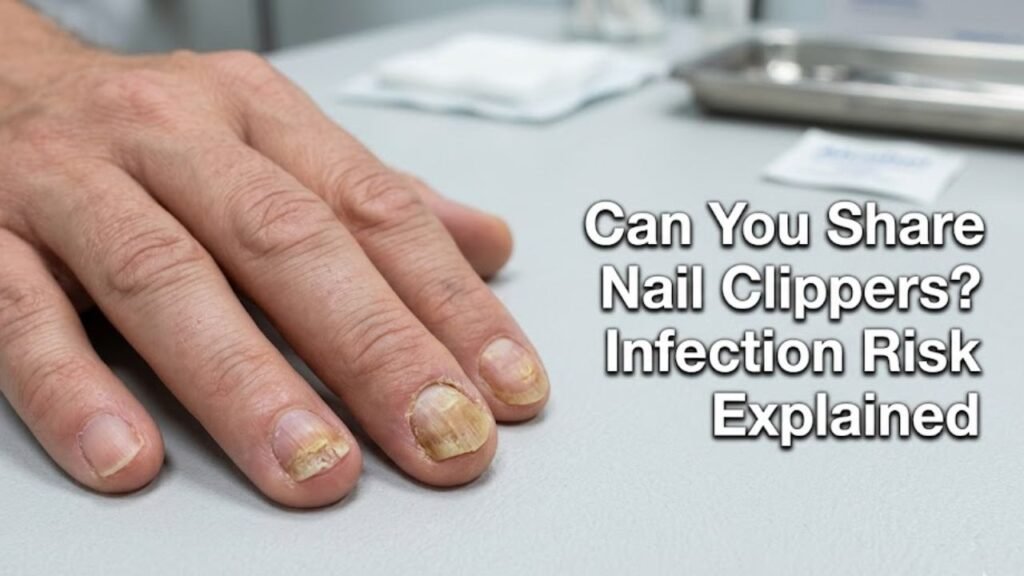
Can you share nail clippers without any consequences? Most people assume yes. It’s just a small grooming tool, passed between family members, used quickly at a nail salon, or borrowed from a roommate without a second thought. But if you’ve recently noticed your toenails looking yellow, feeling thicker than usual, or developing an uncomfortable odor, shared nail clippers may be exactly where the problem started.
Nail clippers make direct contact with your nail edges, cuticles, and surrounding skin every single time they’re used. That contact leaves behind microscopic skin cells, nail debris, moisture, and — critically — any bacteria, fungi, or viruses that were present on the previous user. Without proper sterilization between uses, those pathogens transfer directly to the next person.
If you’re already dealing with changes in your toenails or discomfort around the nail area, now is the right time to take this seriously. Our Toenail Care Prevention Guide covers the most common causes of toenail conditions and what you can do to protect your nail health before a small problem becomes a much bigger one.
Can You Share Nail Clippers Without Getting Infected? Here’s What the Science Says
The short answer is no — not safely, and not without real risk.
Nail clippers are what infection control specialists call a fomite — an inanimate object capable of carrying and transmitting infectious agents from one person to another. The blade, hinge, and debris catch of a nail clipper can harbor live pathogens long after use.
Here is what can realistically transfer through shared clippers:
- Fungal spores (onychomycosis) — The most common toenail infection in the United States, affecting an estimated 10% of the general population. Fungal spores are microscopic, invisible to the naked eye, and can survive on metal surfaces for days to weeks.
- Bacteria (Staphylococcus and others) — Bacteria that cause painful skin and nail infections can survive on clipper blades, especially when tiny cuts or torn cuticles are present. Staph infections around the nail fold can escalate quickly.
- Human Papillomavirus (HPV) — The virus responsible for plantar warts and periungual warts can be transmitted through shared implements that have touched infected skin or nail tissue.
- Paronychia-causing pathogens — This painful infection of the skin surrounding the nail develops when bacteria or fungi enter through micro-cuts — exactly the kind of small trauma that clipping can cause, especially with dull or shared tools.
The clinical concern is real. Sharing nail clippers without sterilization is not meaningfully different from sharing a wound-cleaning instrument.
Warning Signs You May Have Already Picked Up an Infection
So you’ve shared clippers — and now something looks or feels different. These are the symptoms that should prompt you to stop waiting and start acting:
- Yellow, white, or brown nail discoloration — A classic early indicator of toenail fungal infection, particularly when it starts at the tip and spreads toward the base of the nail
- Thickening of the nail — A nail that has become noticeably thicker, harder to clip, or visually distorted is a sign that something beneath the surface has changed
- Brittle or crumbling nail edges — Nails that chip, flake, or crumble at the edges have lost structural integrity, which often points to fungal involvement
- Nail separation from the nail bed — Called onycholysis, this creates a pocket of warmth and moisture where bacteria and fungi thrive rapidly
- Redness, swelling, or warmth around the nail — These are signs of active inflammation and may indicate a bacterial infection such as paronychia that needs prompt attention
- Persistent odor — An unpleasant smell from the nail area, even after washing, is a consistent red flag for active infection
- Pain when walking or wearing shoes — Pressure-related discomfort suggests the nail condition has progressed beyond surface-level and is affecting surrounding tissue
One of these symptoms is a reason to pay close attention. Two or more is a reason to call a podiatrist today.
Who Is Most at Risk When Sharing Nail Clippers?
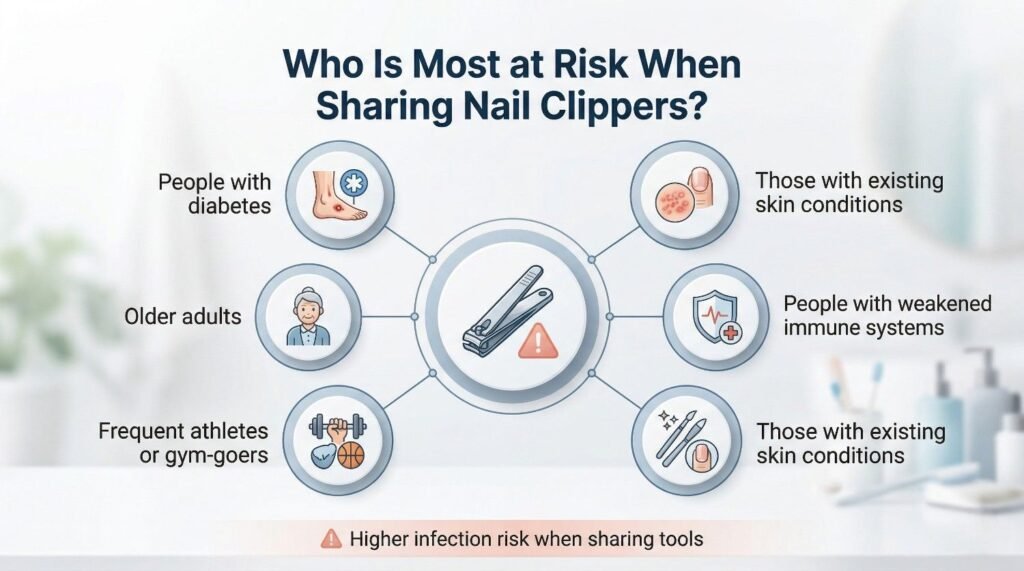
Not every person who shares clippers will develop an infection. But certain individuals face significantly elevated risk and should be especially cautious.
People with diabetes — Reduced circulation and a slower immune response make toenail infections far more difficult to fight. What starts as a minor fungal infection can become a serious complication for diabetic patients.
Older adults — Changes in nail structure, skin integrity, and immune function that come with age make seniors more vulnerable to picking up and developing nail infections from shared tools.
Frequent athletes or gym-goers — Regular exposure to locker rooms, pool areas, and communal showers already increases baseline fungal exposure. Sharing clippers adds another direct transmission route.
Nail salon clients — Tools that aren’t properly sterilized between clients are a documented source of infection. Many salons do not use autoclave sterilization, which is the only method proven to eliminate all pathogens reliably.
People with weakened immune systems — Anyone on immunosuppressive medications, undergoing chemotherapy, or managing chronic illness faces higher infection risk from any shared personal care item.
Those with existing skin conditions — Psoriasis, eczema, or any condition that compromises skin integrity around the nail provides an easier entry point for infectious agents.
If you fall into any of these groups, the question isn’t just “can you share nail clippers?” — it’s “can you afford to?”
Can You Share Nail Clippers Safely? Only If You Do This First
Sharing isn’t always avoidable. But if clippers must be shared, proper sterilization is non-negotiable.
Here is what actually works — and what doesn’t:
What works:
- Wiping the blade and hinge with 70% isopropyl alcohol and letting it air dry fully before use
- Soaking clippers in 70% isopropyl alcohol for 10–15 minutes for a deeper clean
- Using an autoclave if available (the gold standard used in clinical settings)
What does not work:
- Rinsing with water alone
- Wiping with a tissue or dry cloth
- Quick sprays of household disinfectant without adequate contact time
Even with proper sterilization, personal nail clippers should remain personal wherever possible. Clean tools stored properly and used by one person represent the lowest possible risk.
7 Steps to Protect Your Toenail Health Starting Today
- Purchase your own nail clippers immediately. This is the single most effective step. Label them and keep them separate from shared items in the bathroom.
- Clean your clippers after every use. Apply 70% isopropyl alcohol to the blade and hinge with a cotton pad. Allow to air dry completely before storing.
- Store clippers in a dry location. Moisture promotes rust and bacterial growth on metal surfaces. A dry case or drawer is far better than a wet bathroom ledge.
- Use separate clippers for toenails and fingernails. This prevents spreading any developing infection between nail groups.
- Inspect your toenails regularly. Remove nail polish periodically and check each nail under good lighting for any discoloration, thickening, or separation.
- Ask your nail salon about sterilization protocols. Confirm tools are sterilized between clients — or bring your own set to every appointment.
- See a podiatrist at the first sign of trouble. Early treatment is almost always faster, less invasive, and less expensive than treating an advanced infection. Don’t wait until the symptoms become impossible to ignore.
Home Care vs. Professional Podiatric Treatment
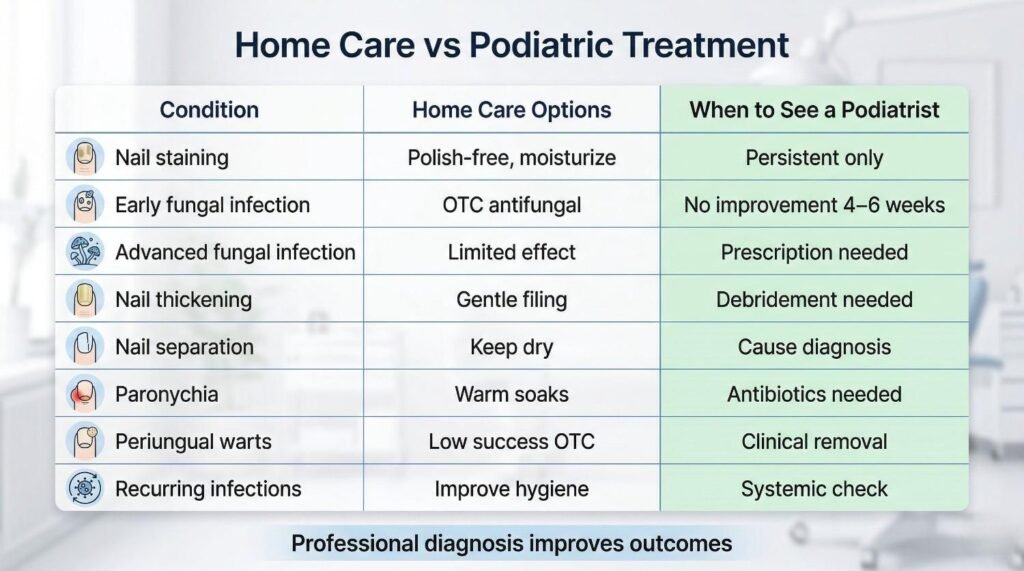
- Nail Staining:
Use polish-free periods and moisturize; professional care is usually not needed unless it persists. - Early Fungal Infection:
OTC antifungal treatments can help, but see a podiatrist if there’s no improvement in 4–6 weeks. - Moderate to Advanced Fungal Infection:
Home care has limited effect; prescription treatment from a podiatrist is required. - Nail Thickening or Distortion:
Gentle filing may help slightly, but professional debridement and diagnosis are recommended. - Nail Separation (Onycholysis):
Keep the area dry and avoid pressure; a podiatrist is needed to identify the underlying cause. - Paronychia (Nail Infection):
Warm soaks may help mild cases, but antibiotics or drainage by a professional may be necessary. - Periungual Warts:
OTC treatments are often ineffective; clinical removal or cryotherapy is recommended. - Recurring Infections:
Improve hygiene, but consult a podiatrist to rule out deeper or systemic issues.
Key Insight:
While home care can help in mild cases, professional podiatric evaluation leads to more accurate diagnosis and significantly better treatment outcomes.
Frequently Asked Questions
Q: Can you share nail clippers just once and still get a fungal infection?
A: Yes. Fungal spores require only a single point of contact to transfer. If the previous user had an active or even asymptomatic toenail fungal infection, one shared use can introduce spores to your nail environment. Whether an infection develops depends on conditions like moisture and skin integrity, but the risk is real from a single use.
Q: How long do infectious pathogens survive on nail clippers?
A: Fungal spores can remain viable on metal surfaces for days to weeks. Bacteria like Staphylococcus can survive for hours to days depending on conditions. This is why rinsing with water is not an effective sterilization method.
Q: Is sharing clippers with a family member safer than sharing with a stranger?
A: Medically, no. Many people carry fungal infections without obvious visible symptoms. The infection risk depends on whether the other person is a carrier — not how well you know them. Families frequently spread toenail fungus to each other through shared tools and bathroom surfaces.
Q: Can sharing nail clippers spread infection from toenails to fingernails?
A: Yes. Using the same pair of clippers on both your toenails and fingernails — especially if one set is already infected — can spread the condition. Keeping separate clippers for each is an easy preventive step.
Q: My toenail looks different after using shared clippers. How quickly should I act?
A: As soon as you notice a change. Toenail fungal infections are progressive — they do not resolve on their own, and they spread to other nails over time. Early evaluation by a podiatrist means a faster, simpler treatment path.
Q: Do nail salons sterilize their tools between clients?
A: Requirements vary by state, and enforcement is inconsistent. The gold standard — autoclave sterilization — is not universally practiced. If you can’t verify a salon’s sterilization process, bringing your own clippers is the safest choice.
Conclusion
Can you share nail clippers and stay completely safe? In most real-world situations — no. Without proper sterilization every single time, shared clippers are a straightforward route for fungal spores, bacteria, and viruses to travel between people. And because toenail infections develop slowly and often without early pain, many people don’t realize something is wrong until the condition has already progressed.
If you’ve been sharing clippers and now notice any changes in your toenails — discoloration, thickening, brittleness, or tenderness — those changes deserve a professional evaluation, not a wait-and-see approach. The longer an infection goes unaddressed, the longer and more intensive the treatment required.
The foot care specialists at Toenail Clinic are experienced in diagnosing and treating the full range of toenail conditions, from early-stage fungal infections to more complex nail disease. Getting an accurate diagnosis now is the fastest route to effective treatment — and to toenails that look and feel healthy again. Don’t put it off.
Struggling to get an appointment?
We help patients in your area bypass clinic waitlists by instantly finding verified podiatry doctors who accept their insurance.