Toenail Care Prevention Guide
Find a Podiatrist Near You
Get same-day appointments with verified podiatrists. Insurance accepted.
Toenail care prevention is the single most effective strategy for avoiding fungal infections, structural nail damage, and the long, frustrating treatment courses that follow when problems are left to develop unchecked.
Most nail problems do not appear overnight. Fungal infections establish themselves gradually over weeks and months. Nail thickening from repeated trauma accumulates slowly with every step. Ingrown nails develop from small trimming habits repeated consistently in the wrong direction. By the time most people notice something is wrong, the condition has already been building for a long time.
The good news is that the same gradual nature of these conditions makes them highly preventable. Small, consistent habits applied daily and weekly create a nail environment where infections struggle to establish and structural damage is minimized.
This guide covers every proven toenail care prevention strategy — trimming technique, footwear management, moisture control, public area safety, pedicure hygiene, and specialist groups who need extra attention. Whether you are maintaining healthy nails, recovering from a previous infection, or managing a chronic condition, these strategies apply directly.
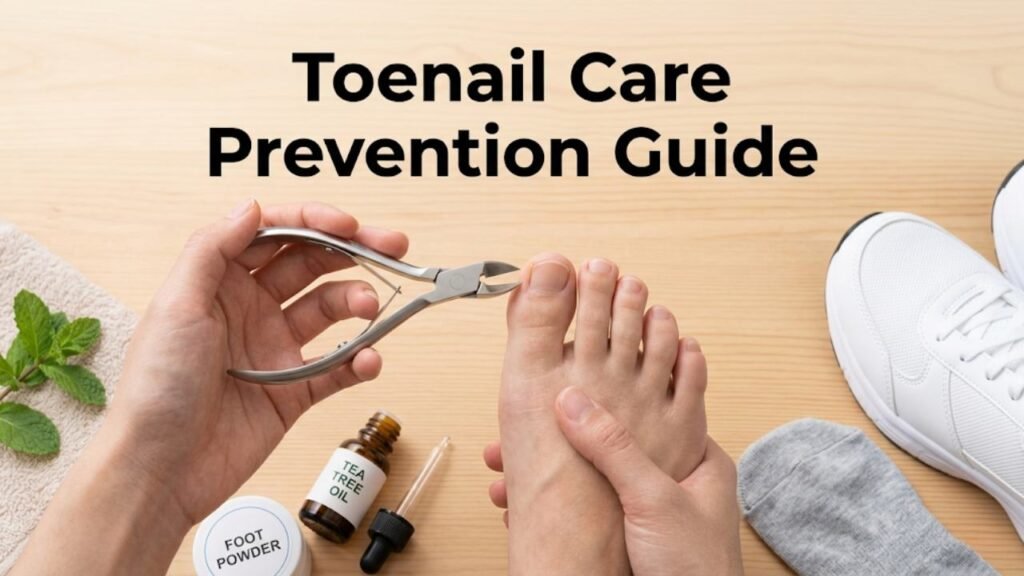
Why Toenail Care Prevention Matters More Than Treatment
Most patients who develop onychomycosis or chronic nail thickening spend months — sometimes well over a year — working through treatment before seeing a clear nail again. Oral antifungal courses run 12 weeks. Full nail regrowth after treatment takes 12 to 18 months regardless of the method used.
Prevention sidesteps all of that. Toenail care prevention keeps the nail environment hostile to fungal organisms, reduces trauma to the nail plate and matrix, and eliminates the hygiene errors that allow reinfection after successful treatment.
From a clinical standpoint, toenail care prevention is particularly important for:
- Anyone who has completed antifungal treatment — recurrence rates range from 10 to 50 percent without preventive measures
- Diabetic patients where nail infections carry elevated complication risk
- Older adults with reduced circulation and slower nail growth
- Athletes who regularly expose their feet to moisture, impact, and communal surfaces
- Immunocompromised individuals whose immune system cannot mount a strong defense against fungal invasion
Prevention is not complicated. It requires consistency and attention to a manageable set of habits.
Toenail Care Prevention Strategy 1: Correct Trimming Technique
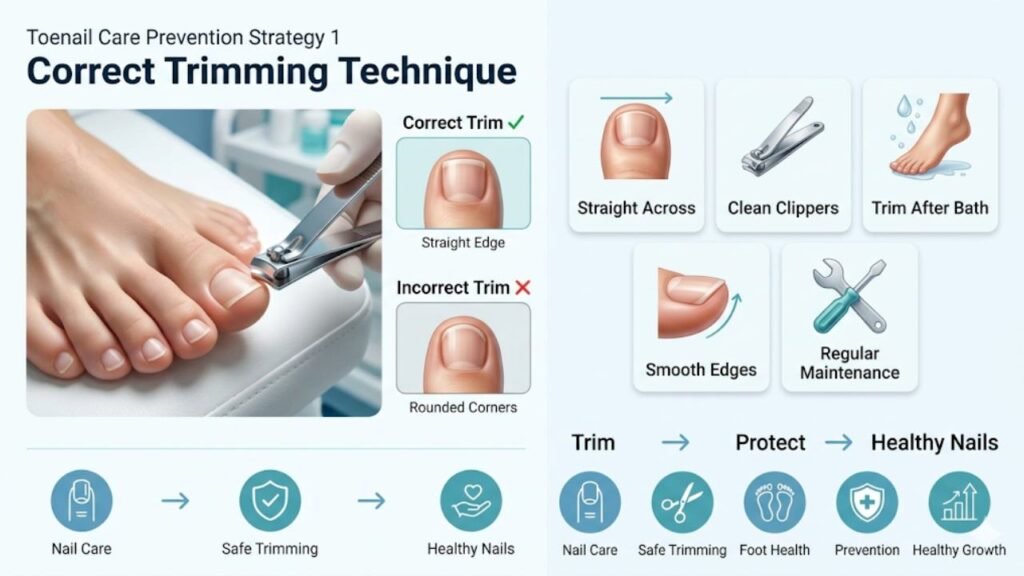
Improper nail trimming is one of the most common preventable causes of nail problems. Cutting nails too short, rounding the corners too aggressively, or trimming at the wrong angle creates the conditions for ingrown nails, nail bed trauma, and entry points for fungal spores.
Correct trimming method for toenail care prevention:
- Cut nails straight across — not curved or rounded at the sides
- Leave a small amount of white nail visible beyond the nail bed
- Trim after bathing when nails are softer and less likely to crack or splinter
- Use sharp, clean clippers designed specifically for toenails — not fingernail clippers
- File any rough or sharp edges gently after trimming to prevent snagging on socks
- Trim every 2 to 4 weeks, depending on your growth rate
Avoid:
- Cutting into the nail corners — this is the primary cause of ingrown toenails
- Trimming nails extremely short, which leaves the nail bed exposed to pressure and trauma
- Tearing or peeling nail edges instead of cutting cleanly
For patients with thick nails, diabetes, or poor vision, professional nail trimming by a podiatrist removes the risk of home trimming errors entirely.
Toenail Care Prevention Strategy 2: Clean, Sterilized Nail Tools
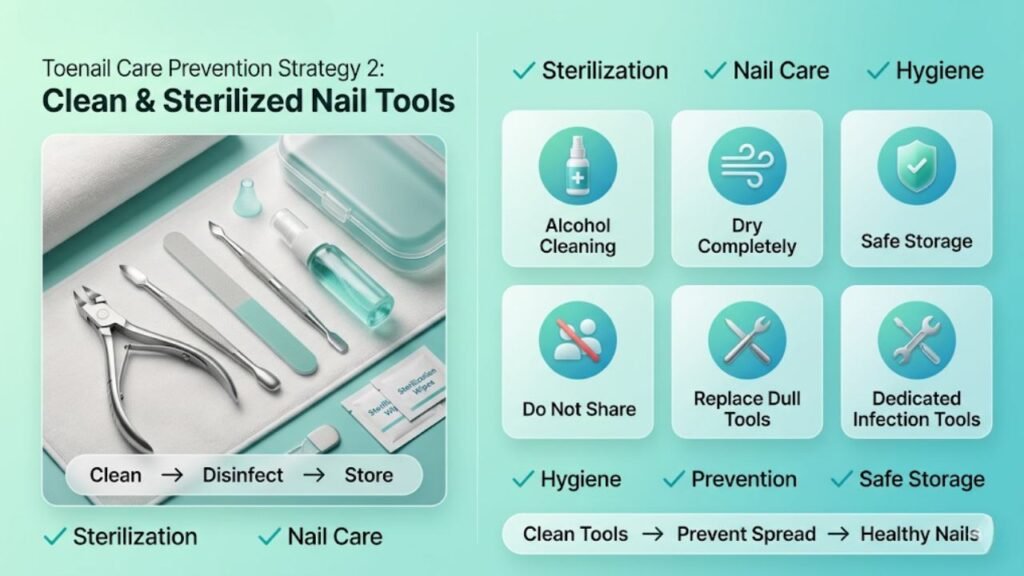
Nail tools are a frequently overlooked transmission route for fungal infection. Clippers, files, and cuticle pushers that are not properly sterilized can transfer fungal spores between nails — or between people — with each use.
Toenail care prevention tool hygiene:
- Clean nail clippers and files with isopropyl alcohol (70 percent or higher) after every use
- Allow tools to dry completely before storing — moisture supports fungal survival on metal surfaces
- Store nail tools in a dry, covered case rather than loose in a bathroom drawer
- Never share nail tools with other household members
- Replace nail clippers when the blade dulls — dull clippers tear rather than cut cleanly, increasing nail trauma
- Use a dedicated set of tools for any nail showing signs of infection — do not use the same tools on healthy nails until the infected nail is fully cleared
These steps take less than a minute after each trimming session and form an essential part of any toenail care prevention routine.
Toenail Care Prevention Strategy 3: Footwear Selection and Rotation
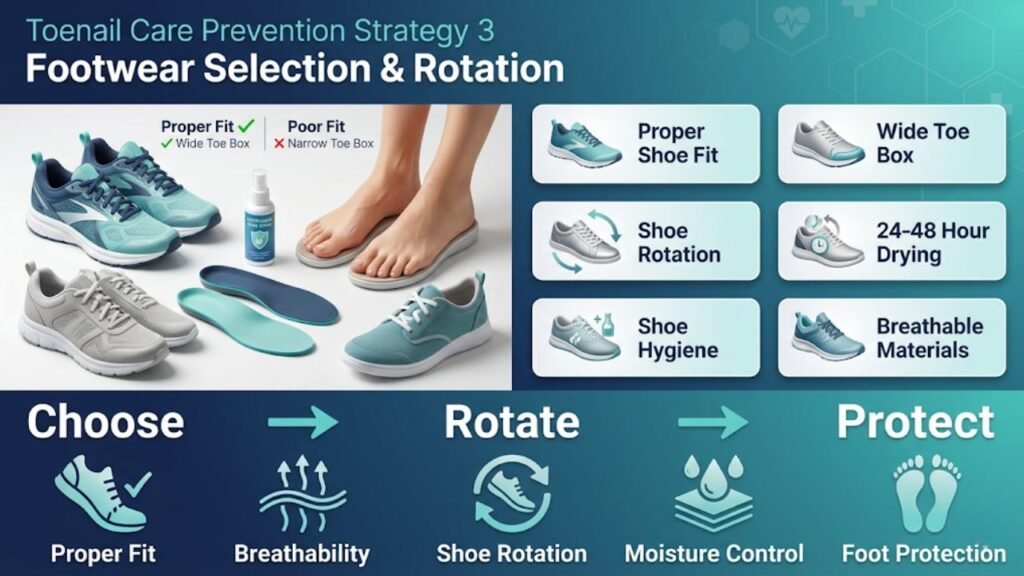
Footwear is the single most important environmental factor in toenail care prevention. Closed shoes create warm, dark, moist conditions that fungal organisms thrive in. Tight shoes add physical trauma with every step.
Footwear habits for effective toenail care prevention:
Shoe fit:
- Choose shoes with adequate toe box width and depth — toes should not press against the front or sides
- Athletic shoes should have a full thumb’s width of space between the longest toe and the shoe end
- Avoid narrow pointed-toe styles that compress the nails during walking
Shoe rotation:
- Alternate between at least two pairs of shoes on different days
- Allow a minimum of 24 to 48 hours of air drying time between wears
- Remove insoles when not wearing the shoe to improve internal drying
Shoe hygiene:
- Apply antifungal powder or spray inside shoes regularly, particularly during warm months or periods of heavy activity
- Replace athletic footwear before the midsole compresses significantly — compressed soles reduce shock absorption and increase nail trauma
- Avoid wearing the same pair of shoes every day even if they feel comfortable
Material selection:
- Choose breathable upper materials — leather, mesh, and canvas allow moisture to escape
- Avoid solid synthetic or plastic uppers that trap heat and moisture inside the shoe
Toenail Care Prevention Strategy 4: Moisture Control
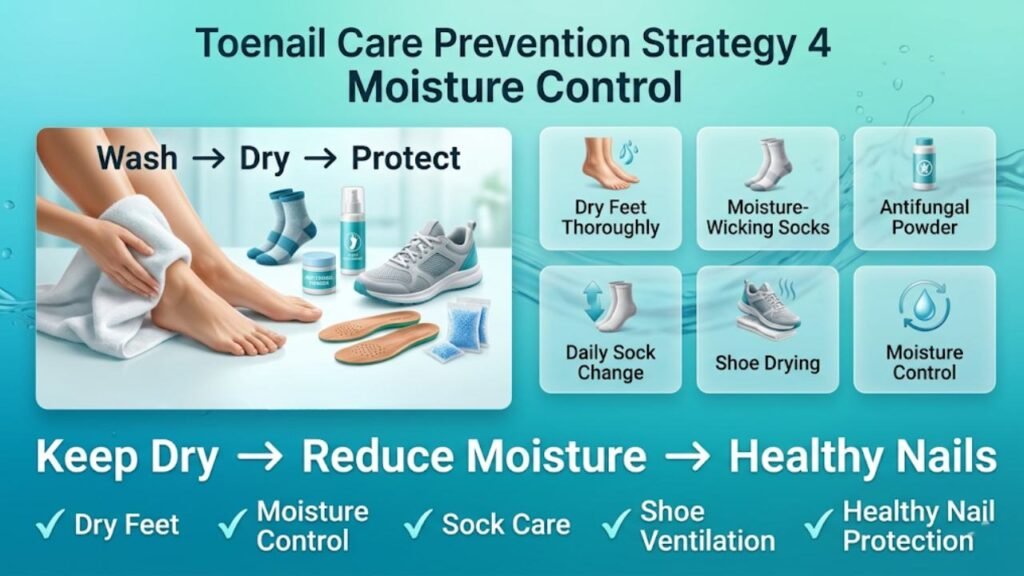
Moisture control is the core of effective toenail care prevention. Fungal organisms require warmth and moisture to establish and multiply. Eliminating excess moisture from the foot environment dramatically reduces infection risk.
Daily moisture management for toenail care prevention:
- Dry feet completely after every shower or bath — pay specific attention to between the toes where moisture lingers
- Use a clean towel section or dedicated foot towel rather than the same towel used for the rest of the body
- Allow feet to air dry briefly before putting on socks when time permits
- Apply foot antiperspirant or antifungal powder to feet that sweat heavily
- Change socks midday if feet become noticeably damp during long days or physical activity
Sock selection:
- Choose moisture-wicking socks — merino wool and synthetic performance blends move moisture away from the skin
- Avoid 100 percent cotton socks in high-activity or high-sweat situations — cotton holds moisture against the skin
- Change socks daily at minimum, and more frequently after exercise or if feet become damp
Environmental moisture:
- Use silica gel inserts or cedar shoe inserts to absorb residual moisture inside footwear
- Store shoes in ventilated areas rather than sealed bags or boxes
- In humid climates, consider a small dehumidifier in shoe storage areas
Toenail Care Prevention Strategy 5: Public Area and Gym Safety
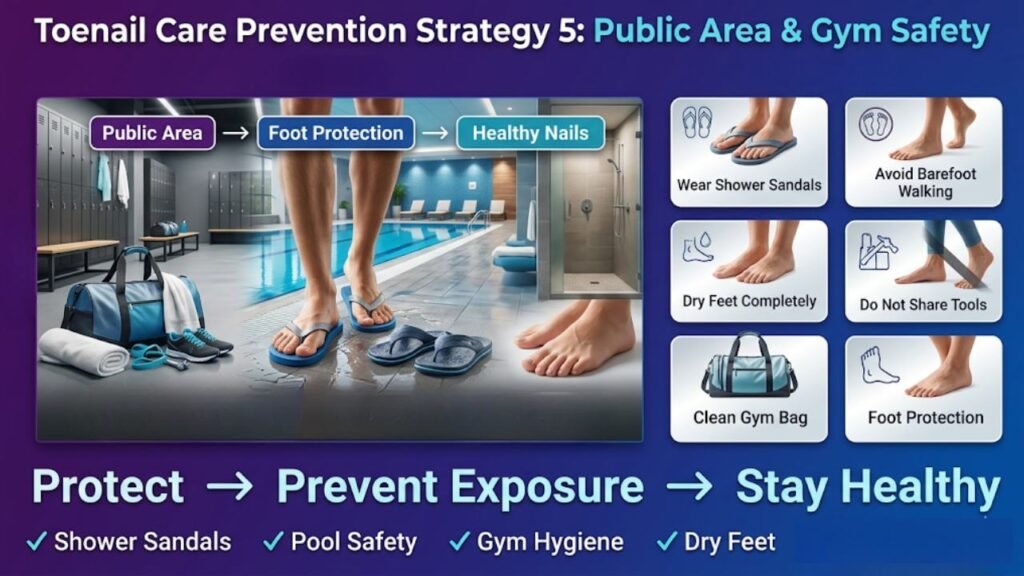
Communal wet areas are the most common environmental source of fungal nail infection. Gym locker room floors, pool surrounds, hotel bathroom tiles, and shared shower areas all carry fungal spores shed by other users.
Toenail care prevention in public areas:
- Always wear flip-flops, shower sandals, or waterproof footwear on pool decks, gym shower floors, and in hotel bathrooms
- Never walk barefoot on locker room floors, regardless of how clean the facility appears
- Dry feet completely immediately after leaving any wet public area
- Do not share towels, footwear, or nail tools with others in any communal setting
- Inspect gym bags and sports bags periodically — damp towels and socks left inside create a fungal environment
For athletes who train regularly in communal facilities, consistent application of these toenail care prevention habits at every session is more effective than occasional vigilance.
Toenail Care Prevention Strategy 6: Safe Pedicure Practices
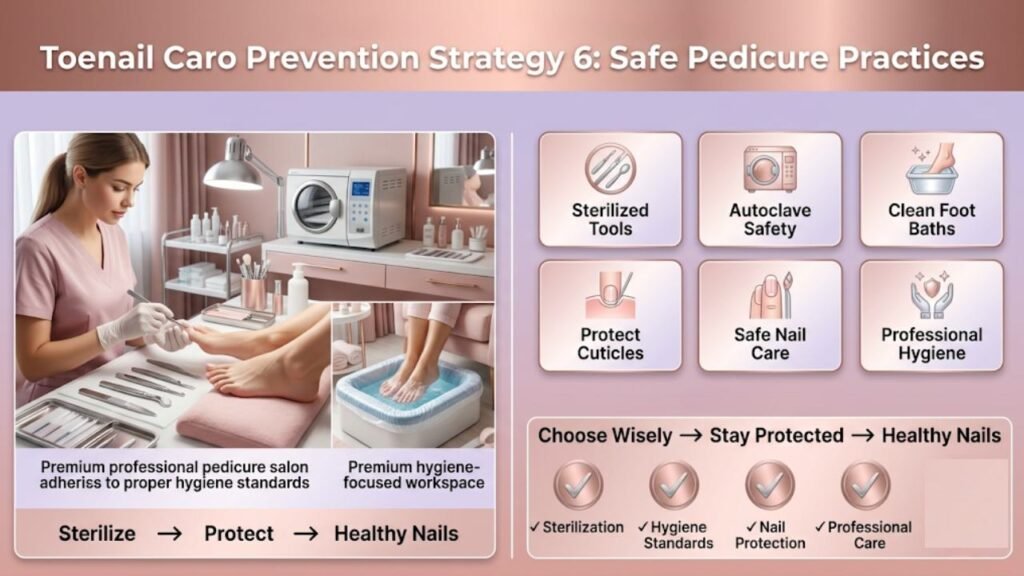
Professional pedicures carry real infection risk when hygiene standards are not maintained. Improperly sterilized instruments, shared foot bath water, and aggressive nail bed manipulation all create opportunities for fungal and bacterial transfer.
What toenail care prevention looks like at a salon:
- Choose salons that sterilize metal instruments in an autoclave between clients — UV lamp storage alone is insufficient for full sterilization
- Ensure foot bath liners are single-use or that the basin is fully disinfected between clients
- Avoid aggressive cuticle cutting — intact cuticles form a protective barrier against nail fold infection
- Do not allow implements to scrape beneath the nail tip aggressively
- If you have any sign of nail infection, postpone the pedicure until the condition is evaluated and treated
- Bring your own sterilized tools if you prefer guaranteed hygiene control
Cosmetic nail services are not incompatible with toenail care prevention — they simply require verifying that basic infection control standards are in place.
Toenail Care Prevention Strategy 7: Daily Nail Inspection
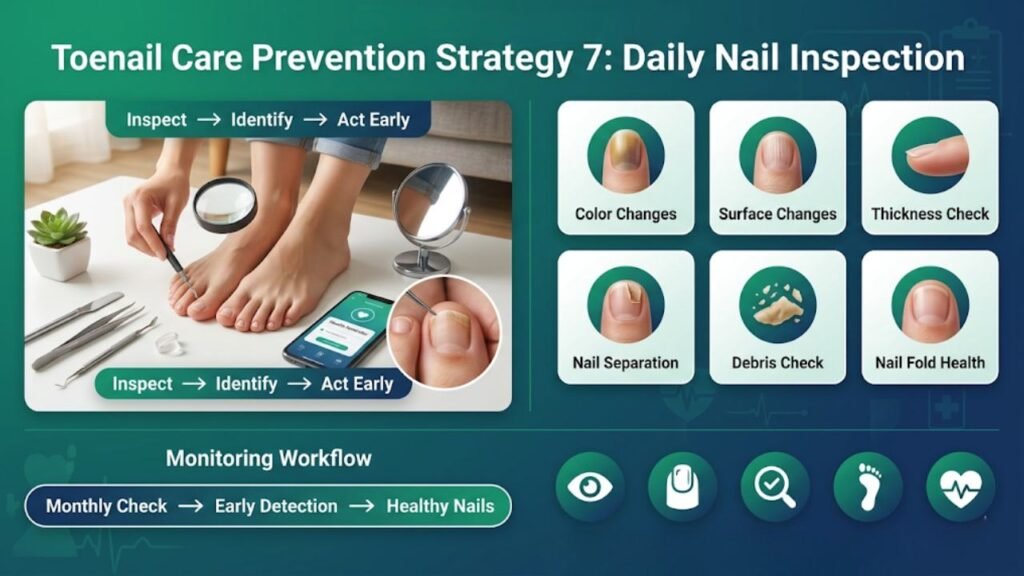
Early detection is one of the highest-value components of toenail care prevention. Catching changes in nail color, texture, or thickness early — before an infection or structural problem becomes established — dramatically shortens treatment duration and improves outcomes.
What to look for during monthly self-inspection:
- Any change in nail color — yellowing, whitening, browning, or dark streaks
- Nail surface changes — new ridges, pitting, roughness, or powdery texture
- Nail thickness increasing compared to previous months
- Nail lifting or separating from the nail bed at the tip or sides
- Debris accumulating beneath the nail
- Swelling, redness, or tenderness around the nail fold
Most significant nail changes develop gradually over weeks. Monthly inspection catches problems at an early stage when simpler toenail care prevention and treatment measures are still sufficient.
Toenail Care Prevention for High-Risk Groups
Diabetic Patients
Diabetes creates multiple compounding risk factors for nail problems. Peripheral neuropathy reduces sensation, meaning nail trauma or early infection may not produce noticeable pain. Reduced circulation impairs healing and immune response in foot tissue.
Toenail care prevention for diabetic patients:
- Inspect feet and nails daily — do not rely on pain as a warning sign
- Never attempt to treat ingrown nails, corns, or nail infections at home
- Schedule regular professional podiatric care for nail trimming and foot evaluation
- Report any nail color change, swelling, or skin break around the nail to your healthcare provider promptly
- Wear properly fitted diabetic footwear at all times
Athletes
Athletes face elevated nail risk from repetitive impact, moisture exposure, and regular use of communal training facilities.
Toenail care prevention for athletes:
- Trim nails short before competition or long training sessions
- Wear correctly fitted athletic footwear — nail blackening and lifting often result from nails repeatedly striking the shoe
- Change out of wet footwear and socks immediately after training
- Use antifungal powder inside athletic shoes as a routine practice
- Replace athletic shoes before significant sole compression occurs
Older Adults
Age-related circulation changes, slower nail growth, and cumulative trauma over decades make older adults particularly prone to developing thick, brittle, or infected nails.
Toenail care prevention for seniors:
- Schedule regular professional nail trimming if self-trimming is difficult or unsafe
- Inspect nails monthly — or more frequently with any systemic health condition affecting circulation
- Prioritize breathable, properly fitted footwear
- Address athlete’s foot promptly — it is the most common route of nail infection at any age
Immunocompromised Individuals
Patients on immunosuppressive medication, chemotherapy, or living with immune-affecting conditions face faster infection progression and reduced treatment response.
Toenail care prevention for immunocompromised patients:
- Apply all toenail care prevention strategies consistently and without exception
- Report nail changes to your healthcare provider early rather than monitoring and waiting
- Discuss prophylactic antifungal options with your specialist if recurrent infections are a pattern
Preventing Reinfection After Treatment
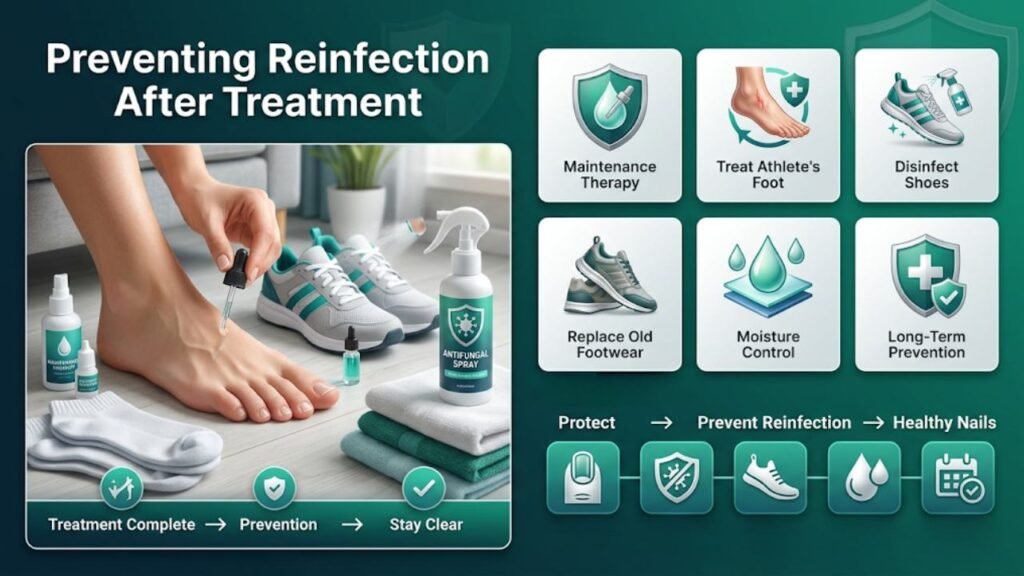
Completing antifungal treatment successfully does not guarantee permanent clearance. Reinfection is one of the most common reasons patients return for further treatment — and it is largely preventable with deliberate toenail care prevention.
Post-treatment reinfection prevention:
- Apply topical antifungal to previously infected nails once or twice weekly as ongoing maintenance
- Treat any athlete’s foot immediately — it is the primary bridge between environmental spores and nail infection
- Disinfect all footwear before wearing again — antifungal spray applied inside shoes and left to dry overnight
- Replace old shoes that may still harbor fungal spores from during the infection period
- Continue all moisture control, sock hygiene, and public area protection habits permanently
The effort required to prevent reinfection is significantly less than the effort required to treat a recurrence from scratch.
Common Toenail Care Prevention Mistakes
These are the errors most likely to undermine otherwise good nail care habits:
Cutting nails too short — Exposes the nail bed to direct pressure and removes the protective nail edge.
Covering discolored nails with polish — Traps moisture and hides early infection signs that should prompt professional evaluation.
Ignoring athlete’s foot — The most common entry point for fungal nail infection. Treating skin fungus promptly protects the nails.
Wearing damp footwear — Even one day in wet shoes creates conditions that accelerate fungal growth significantly.
Sharing nail tools — One of the most direct routes of infection transfer between household members.
Stopping preventive habits after treatment — Reinfection risk is highest in the months immediately following successful treatment.
Walking barefoot in communal areas — Even brief barefoot exposure on contaminated surfaces is sufficient for spore transfer.
Frequently Asked Questions About Toenail Care Prevention
How often should toenails be trimmed for good toenail care prevention?
Most adults benefit from trimming every 2 to 4 weeks. Nails should be cut straight across with clean, sharp clippers. Diabetic patients and seniors should consider professional trimming if home care is difficult or carries risk.
Does nail polish affect toenail care prevention?
Polish itself does not cause infection, but covering discolored or changing nails delays diagnosis. Clear or breathable nail products are preferable during active toenail care prevention, and polish should always be removed to inspect nails regularly.
What is the most important single toenail care prevention habit?
Keeping feet consistently dry — particularly after bathing, exercise, and any wet area exposure — is the most impactful single toenail care prevention measure because moisture is the primary enabler of fungal infection.
Do antifungal powders and sprays actually help?
Yes, particularly in high-risk situations — gym use, athletic activity, warm climates, and post-treatment maintenance. They are not substitutes for good hygiene but meaningfully reduce fungal load in the shoe environment as part of a broader toenail care prevention approach.
Can toenail fungus spread within a household?
Fungal organisms shed from infected nails survive on bathroom floors, shower tiles, and shared towels. Consistent use of footwear in shared bathrooms, dedicated towels, and sterilized nail tools significantly reduces household transmission risk.
When should I see a podiatrist rather than managing toenail care prevention at home?
See a podiatrist if you notice nail discoloration that persists beyond a few weeks, nail thickening that makes home trimming difficult, any sign of infection spreading to surrounding skin, or if you have diabetes or circulatory problems affecting your feet.
Summary
Toenail care prevention is a practical, manageable set of daily and weekly habits — not a complicated medical protocol. The foundation is simple: keep feet dry, trim nails correctly, maintain clean tools, choose appropriate footwear, protect feet in public areas, and monitor nails regularly for early changes.
For anyone who has already experienced a fungal infection or structural nail problem, consistent toenail care prevention after treatment is what determines whether results last or reinfection occurs within months.
Healthy nails are maintained through small consistent actions, not dramatic interventions. Start with the habits that address your highest risk factors — moisture control and footwear management for most adults — and build from there. The investment of a few minutes each day protects against months of treatment down the road.
Struggling to get an appointment?
We help patients in your area bypass clinic waitlists by instantly finding verified podiatry doctors who accept their insurance.