Breathable Shoe Materials Ranked
Find a Podiatrist Near You
Get same-day appointments with verified podiatrists. Insurance accepted.
Breathable shoe materials ranked is a useful topic for anyone looking to improve foot comfort, hygiene, and long-term footwear durability. Shoes that trap heat and moisture often contribute to foot odor, fungal infections, and discomfort, especially during long workdays or physical activity.
For homeowners, property managers, and individuals who spend many hours on their feet, selecting footwear made from breathable materials can significantly improve foot health. Materials that allow airflow help regulate temperature and reduce moisture buildup inside shoes.
This guide explores breathable shoe materials ranked by airflow efficiency, moisture control, durability, and comfort. Understanding these differences helps consumers make better choices when selecting everyday footwear.
Why Breathable Shoe Materials Matter
Feet contain thousands of sweat glands that release moisture throughout the day. When shoes lack ventilation, sweat accumulates and creates a warm environment that encourages bacterial and fungal growth.
Breathable shoe materials help regulate airflow and allow moisture to evaporate, reducing the risk of odor and skin irritation.
Key benefits of breathable footwear include:
- Improved temperature regulation
- Reduced moisture buildup
- Lower risk of fungal infections
- Increased comfort during long wear
- Better shoe longevity
Understanding breathable shoe materials ranked helps individuals choose footwear that supports healthier feet.
Factors That Determine Shoe Breathability
Not all shoe materials perform equally when it comes to airflow and moisture management.
Air Permeability
Materials that allow air to circulate freely help keep feet cool and dry.
Moisture Absorption
Some materials absorb sweat and release it slowly, preventing excessive dampness.
Material Thickness
Thin fabrics typically allow more airflow than dense or layered materials.
Shoe Construction
Ventilation holes, mesh panels, and moisture-wicking liners also influence breathability.
These factors play a significant role in determining how breathable shoe materials ranked perform in real-world conditions.
Top Breathable Shoe Materials Ranked
Different materials offer varying levels of ventilation and moisture management.
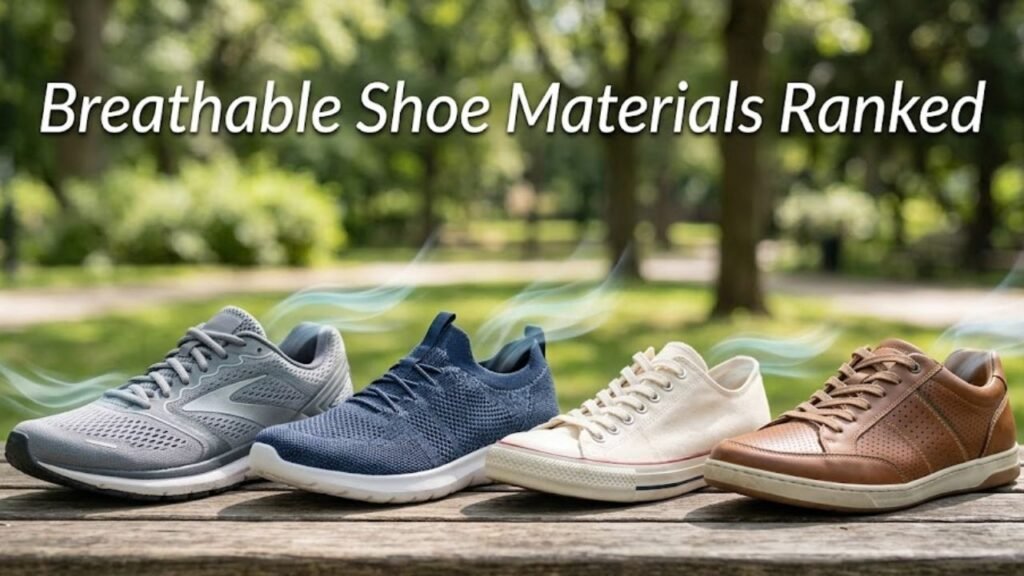
1. Mesh Fabric
Mesh is widely considered the most breathable material used in modern footwear. It features a lightweight woven structure that allows air to pass through easily.
Advantages
- Excellent airflow
- Lightweight design
- Ideal for athletic footwear
Because of its high ventilation capacity, mesh consistently appears at the top of breathable shoe materials ranked.
2. Knit Fabric
Knit materials are flexible and breathable, often used in modern athletic shoes.
Advantages
- Flexible construction
- Good moisture ventilation
- Comfortable for extended wear
Knit shoes adapt to foot shape while maintaining airflow.
3. Canvas
Canvas is a natural fabric that provides moderate breathability while remaining durable.
Advantages
- Natural fiber structure
- Lightweight material
- Suitable for casual footwear
Canvas is a classic option within breathable shoe materials ranked for everyday shoes.
4. Perforated Leather
Leather itself is not highly breathable, but perforated leather improves ventilation.
Advantages
- Durable construction
- Improved airflow through perforations
- Professional appearance
Perforated leather balances durability and ventilation.
5. Natural Leather
Traditional leather offers moderate breathability because it is a natural material that allows limited airflow.
Advantages
- Strong and long-lasting
- Natural moisture regulation
- Suitable for formal footwear
Leather remains a reliable option in breathable shoe materials ranked when paired with good ventilation design.
6. Bamboo Fiber Fabric
Bamboo-based textiles are gaining popularity due to their natural moisture-wicking properties.
Advantages
- Eco-friendly material
- Naturally antimicrobial
- Moisture-wicking properties
Bamboo fabrics help reduce odor and maintain dryness.
7. Synthetic Textile Blends
Many modern shoes combine synthetic fibers designed to wick moisture away from the foot.
Advantages
- Lightweight construction
- Engineered ventilation panels
- Durable and flexible
Synthetic blends often appear in sports footwear within breathable shoe materials ranked.
8. Suede
Suede provides limited airflow compared to other materials but can still offer moderate breathability.
Advantages
- Soft texture
- Moderate moisture regulation
- Stylish appearance
Suede performs best when combined with breathable linings.
9. Rubber or Plastic Materials
Rubber and plastic materials provide very little ventilation and are typically the least breathable.
Limitations
- Traps heat and moisture
- Increases sweating
- Higher risk of odor buildup
These materials rank lowest in breathable shoe materials ranked.
Breathable Shoe Materials Comparison Table
| Material | Breathability Level | Moisture Control | Best Use |
|---|---|---|---|
| Mesh | Very High | Excellent | Athletic shoes |
| Knit fabric | High | Good | Running shoes |
| Canvas | Moderate | Good | Casual footwear |
| Perforated leather | Moderate | Moderate | Dress shoes |
| Natural leather | Moderate | Moderate | Formal shoes |
| Bamboo fiber | Moderate | Good | Eco-friendly footwear |
| Synthetic blends | Moderate | Good | Sports footwear |
| Suede | Low–Moderate | Limited | Fashion footwear |
| Rubber/plastic | Low | Poor | Waterproof shoes |
This comparison helps illustrate how breathable shoe materials ranked perform across different conditions.
How Breathable Materials Prevent Foot Problems
Shoes with poor ventilation often create conditions that allow bacteria and fungi to thrive.
Breathable materials help prevent these problems by reducing moisture buildup.
Common Foot Issues Caused by Poor Ventilation
- Foot odor
- Athlete’s foot infections
- Toenail fungus
- Skin irritation
- Excessive sweating
Selecting footwear from the breathable shoe materials ranked list can significantly reduce these risks.
Choosing the Right Breathable Shoes
Several factors should be considered when selecting breathable footwear.
Key Considerations
- Intended use (sports, work, casual)
- Climate conditions
- Foot sweating levels
- Shoe ventilation design
- Sock compatibility
Considering these elements ensures the best results when choosing from breathable shoe materials ranked.
Additional Features That Improve Shoe Ventilation
Material choice is only one factor in shoe breathability.
Helpful Ventilation Features
- Mesh ventilation panels
- Moisture-wicking linings
- Removable insoles
- Airflow channels in soles
These features enhance the effectiveness of breathable shoe materials ranked.
Foot Hygiene Tips for Breathable Shoes
Even the most breathable shoes require proper care.
Recommended Habits
- Rotate shoes regularly
- Allow shoes to dry between uses
- Wear moisture-wicking socks
- Clean insoles periodically
- Store shoes in ventilated areas
These habits help maximize the benefits of breathable shoe materials ranked.
Practical Tips for Maintaining Breathable Footwear
Proper maintenance helps preserve airflow and hygiene.
Expert recommendations include:
- Replace worn insoles regularly
- Avoid storing shoes in sealed containers
- Clean shoes periodically
- Allow shoes to dry overnight
- Choose socks designed for moisture control
These strategies enhance the performance of breathable shoe materials ranked.
FAQs
What is the most breathable shoe material?
Mesh fabric is generally considered the most breathable shoe material due to its open weave structure.
Are leather shoes breathable?
Natural leather allows some airflow, but it is less breathable than mesh or knit fabrics.
Do breathable shoes reduce foot odor?
Yes. Breathable materials reduce moisture buildup, which helps prevent odor-causing bacteria.
Are breathable shoes better for hot climates?
Yes. Breathable materials improve airflow and help regulate temperature in warm environments.
Do socks affect shoe breathability?
Yes. Moisture-wicking socks improve ventilation and help keep feet dry.
Conclusion
Choosing the right footwear materials plays a critical role in maintaining foot comfort and hygiene. Shoes that trap moisture can lead to odor, fungal infections, and discomfort during prolonged wear.
Understanding breathable shoe materials ranked helps consumers identify which materials provide the best airflow and moisture management. Mesh, knit fabrics, and canvas typically offer the highest breathability, while rubber and plastic materials trap heat and moisture.
By selecting breathable footwear, maintaining proper shoe hygiene, and allowing shoes to dry between uses, individuals can significantly improve foot health and comfort. For homeowners and property managers who spend long hours on their feet, investing in well-ventilated footwear is a practical step toward healthier daily living.
Ready to See a Podiatrist?
Connect with top-rated podiatrists in your area. Book appointments instantly with verified doctors who accept your insurance.
Same-Day Appointments
Get seen today with urgent care availability
Verified Reviews
Real patient reviews and ratings
Insurance Accepted
Most major insurance plans covered