Toenail Fungus and Immune System Weakness
Find a Podiatrist Near You
Get same-day appointments with verified podiatrists. Insurance accepted.
Toenail fungus and immune system weakness are connected in ways that most patients never hear explained — and that connection is often the real reason why some nail infections never fully clear, keep coming back after treatment, or affect multiple nails simultaneously despite careful hygiene.
Most advice about nail fungus focuses on the outside — which cream to apply, what shoes to wear, how to keep feet dry. All of that matters. But for many patients, the more important factor is what is happening on the inside. Their immune system is not doing what it should to fight off fungal organisms, and no external measure fully makes up for that gap.
This guide explains the link between toenail fungus and immune system weakness in plain, practical terms. You will understand why a weakened immune system makes nail fungus more likely, what conditions and medications cause that weakness, what signs point to an immune system issue, and what realistic steps help manage this combination more effectively.
How Your Immune System Normally Fights Nail Fungus
Before looking at how toenail fungus and immune system weakness are connected, it helps to understand what happens when your immune system is working normally.
Fungal spores — the microscopic particles that cause nail infections — exist almost everywhere. They are on gym floors, in swimming pools, on bathroom tiles, and in soil. Most people who walk barefoot in these areas never develop nail fungus. That is because a healthy immune system identifies and deals with these spores before an infection gets started.
First, your immune system detects the threat
Skin cells and immune cells around your nails are equipped with sensors that recognize fungal organisms when they make contact. These sensors trigger an immediate response — attracting immune cells called neutrophils to the area to attack the fungal spores before they can enter the nail.
Then, your immune system launches a targeted response
If the initial response does not fully clear the early infection, a second layer of immunity takes over. Specialized immune cells called T-lymphocytes develop a targeted response against the specific fungal organism. This helps eliminate what remains and builds a form of memory to respond faster in the future.
The result in a healthy person
Most fungal spore exposure is cleared without the person ever knowing it happened. The spores contact the nail area, the immune response deals with them, and no infection develops.
When toenail fungus and immune system weakness come together, this process breaks down at one or more of these steps — and the fungus gets a foothold it would otherwise never have.
What Immune System Weakness Actually Means
Immune system weakness does not mean your immune system is completely switched off. It means one or more parts of it are not working as well as they should — which is enough to give fungal organisms a meaningful advantage.
There are two broad types of immune weakness relevant to toenail fungus:
Problems with the first-response system
The immune cells that should rush to early infection sites — neutrophils — may be reduced in number, slower to arrive, or less able to destroy fungal organisms when they get there. This allows the fungal colony to establish itself before it can be cleared.
Problems with the targeting system
The immune cells that develop specific, long-term responses to particular organisms — T-lymphocytes — may be suppressed or depleted. Without these cells working properly, even a small fungal colony that gets established can persist and grow rather than being brought under control.
Both types of weakness can contribute to toenail fungus and immune system weakness becoming a serious problem.
6 Key Connections Between Toenail Fungus and Immune System Weakness
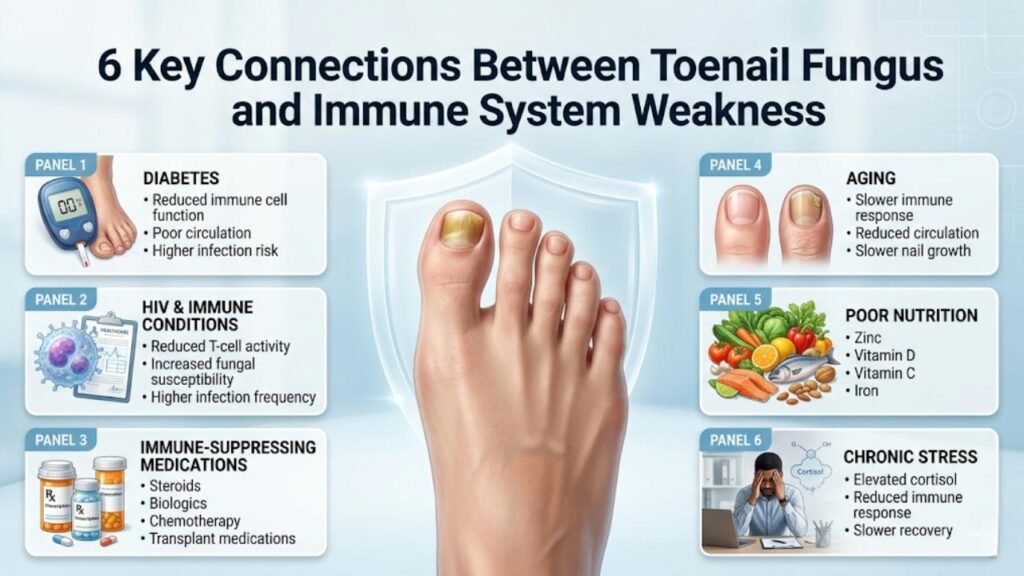
Connection 1: Diabetes Weakens Multiple Immune Functions at Once
Diabetes is the most common real-world cause of toenail fungus and immune system weakness in the general population. High blood sugar does not just affect your energy levels — it directly interferes with how your immune system works.
How high blood sugar affects immune defense:
High glucose levels in the blood and surrounding tissue impair the ability of immune cells to move toward the infection, engulf fungal organisms, and destroy them once captured. All three steps — movement, capture, and killing — become slower and less effective when blood sugar is poorly controlled.
Additionally, diabetes damages small blood vessels over time. The feet are particularly affected. Poor blood flow means that immune cells and antifungal medication both have a harder time reaching the nail bed through the circulation.
What this means in practice:
Diabetic patients develop toenail fungus more often than non-diabetic adults, often have more nails affected, see infections spread more quickly, and find that standard treatment takes longer to work — or works less completely. This is not bad luck. It is a direct consequence of toenail fungus and immune system weakness interacting through the specific immune impairments caused by diabetes.
Connection 2: HIV and Immune-Suppressing Conditions Reduce Antifungal T-Cell Activity
HIV is the clearest example of a condition that specifically depletes the T-lymphocytes most important for fighting fungal infections. As CD4+ T-cell counts decline with untreated HIV, the ability to control dermatophyte organisms falls with them.
Toenail fungus is one of the most common infections seen in HIV-positive patients, and it often presents in an unusual way — the infection enters near the cuticle rather than starting at the nail tip, which is a pattern that specifically points to impaired T-cell immunity.
Other conditions that reduce T-cell function and create similar toenail fungus and immune system weakness problems include:
- Lymphoma and other blood cancers that affect immune cell populations
- Organ transplant — patients must take medication to suppress their immune system to prevent organ rejection, which also suppresses antifungal T-cell activity
- Severe combined immune deficiency and other inherited immune disorders
Connection 3: Medications That Suppress the Immune System
A growing number of commonly prescribed medications create toenail fungus and immune system weakness as a recognized side effect or complication.
Corticosteroids (prednisone, prednisolone)
Long-term use of steroid medications for conditions like asthma, inflammatory bowel disease, rheumatoid arthritis, or skin conditions suppresses multiple parts of the immune system simultaneously. Immune cells are less able to detect and respond to fungal organisms while steroids are being taken.
Biologic medications
Newer medications used for rheumatoid arthritis, psoriasis, and other autoimmune conditions — including TNF-alpha inhibitors such as adalimumab, infliximab, and etanercept — work by blocking specific parts of the immune system. This reduces inflammation effectively but also reduces the immune system’s ability to fight infections, including fungal nail infections.
Chemotherapy
Most chemotherapy agents reduce the production of all blood cells including the white blood cells that fight infection. During and after chemotherapy, immune function is significantly reduced, and fungal infections — including nail infections — are more likely to occur and harder to clear.
Immunosuppressants for organ transplant
Transplant patients take medications like tacrolimus and mycophenolate for years or decades to prevent their body from rejecting the transplanted organ. These medications directly suppress the T-cells that control fungal infections, creating a persistent toenail fungus and immune system weakness situation.
If you take any of these medications and have developed persistent or recurrent nail fungus, your medication is likely a significant contributing factor that needs to be discussed with your healthcare team.
Connection 4: Aging Gradually Reduces Immune Efficiency
Older adults develop toenail fungus at higher rates than younger adults — and this is not simply because they have had more time to be exposed to fungal spores. The immune system genuinely becomes less efficient with age.
Neutrophils in older adults are slower to respond to infection signals and less effective at destroying organisms when they arrive. T-cell function also declines — the immune system’s ability to develop targeted, memory-based responses to specific pathogens becomes less reliable.
At the same time, older adults have slower nail growth — meaning infected nail tissue stays in place longer — and often have some degree of reduced blood flow to the feet, which further impairs both immune delivery and medication delivery to the nail.
The combination of reduced immune efficiency, slower nail growth, and reduced circulation makes toenail fungus and immune system weakness particularly common and particularly difficult to manage in people over 65.
Connection 5: Poor Nutrition Reduces Immune Capacity
The immune system requires adequate nutrition to function properly. Deficiencies in specific nutrients directly impair immune cell production, function, and response time.
Nutrients most relevant to toenail fungus and immune system weakness:
Zinc — Required for the development and activation of immune cells. Zinc deficiency reduces the number and function of T-lymphocytes and impairs neutrophil activity. Zinc is also directly involved in maintaining skin and nail barrier function.
Vitamin D — Plays a significant role in immune regulation. Vitamin D deficiency is associated with increased susceptibility to multiple types of infection, including fungal infections. The cells that line the skin and nail folds use vitamin D to produce antimicrobial compounds that defend against fungi.
Vitamin C — Supports neutrophil function and the structural integrity of the skin barrier. Significant deficiency reduces the immune system’s first-line defense against skin and nail fungal contact.
Iron — Severe iron deficiency impairs T-cell function and reduces the oxidative mechanisms neutrophils use to kill fungal organisms.
Nutritional deficiency as a cause of toenail fungus and immune system weakness is most relevant in adults with restricted diets, malabsorption conditions, or chronic illness affecting appetite and nutrition.
Connection 6: Chronic Stress Suppresses Immune Response Over Time
Ongoing stress — whether physical or emotional — triggers the release of cortisol and other stress hormones. While acute stress temporarily boosts some immune functions, chronic sustained stress consistently suppresses immune activity through elevated cortisol levels.
Cortisol reduces the number and activity of lymphocytes and decreases the production of cytokines — the signaling molecules that coordinate immune responses. Over months and years, chronic stress creates a measurable reduction in immune competence.
For patients who have noticed that their nail fungus is more problematic during particularly stressful periods — more reinfections, slower treatment response — the toenail fungus and immune system weakness connection through chronic stress is a plausible contributing mechanism.
Signs That Immune System Weakness May Be Behind Your Nail Fungus
Not every case of toenail fungus involves immune weakness. But certain patterns suggest immunity is a contributing factor worth discussing with your doctor:
- Multiple nails infected simultaneously without obvious explanation
- Nail fungus that did not clear despite completing a full treatment course correctly
- Rapid recurrence within months of finishing treatment
- Nail infection that started near the cuticle rather than the nail tip
- History of other recurring infections — skin infections, respiratory infections, or yeast infections
- Recent or ongoing use of corticosteroids, biologic medications, or chemotherapy
- Diagnosis of diabetes, especially with suboptimal blood sugar control
- Strong family history of persistent or recurrent nail fungal infections
Any of these patterns — and especially several occurring together — makes the toenail fungus and immune system weakness connection clinically worth discussing during your podiatric evaluation.
How Immune System Weakness Changes Treatment
When toenail fungus and immune system weakness are both present, treatment often needs to be adjusted compared to standard protocols designed for otherwise healthy adults.
Longer treatment courses
Standard oral terbinafine is prescribed for 12 weeks in healthy adults. Patients with meaningful immune weakness may need extended courses — sometimes 16 to 24 weeks — to achieve the same level of fungal clearance, because the immune system is less able to support final clearance of residual organisms that medication has suppressed but not fully eliminated.
Combination treatment is more often necessary
For healthy adults, oral antifungal medication alone achieves good results in most cases. For patients with immune weakness, combining oral medication with professional nail debridement and topical antifungal simultaneously produces better results because it addresses the infection from multiple directions simultaneously.
Realistic expectations need adjustment
Complete cosmetic restoration of the nail to a fully normal appearance may not be achievable in patients with significant immune suppression. Meaningful improvement, prevention of further spread, and reduction of complication risk are realistic and valuable goals even when full clearance is not achievable.
Maintenance therapy may be appropriate
After completing a primary treatment course, patients with ongoing immune weakness are good candidates for maintenance prophylactic topical antifungal — applied once or twice weekly to previously infected nails — to reduce the probability of recurrence by providing ongoing antifungal protection that the immune system alone cannot reliably maintain.
Practical Steps to Support Immune Function Alongside Treatment
While these steps cannot overcome significant immune-suppressing conditions or medications, they can help optimize whatever immune function is available.
Manage blood sugar carefully (for diabetic patients)
Better glycemic control directly improves neutrophil function. Reducing HbA1c toward target levels is one of the most impactful interventions for both reducing nail fungus susceptibility and improving treatment response in diabetic patients.
Address nutritional deficiencies
If you suspect zinc, vitamin D, iron, or vitamin C deficiency, discuss testing with your doctor. Correcting confirmed deficiencies supports immune function meaningfully.
Get consistent sleep
Sleep is when the immune system performs much of its maintenance and repair activity. Consistently poor sleep measurably reduces immune cell activity. Improving sleep quality is a genuine immune support measure.
Reduce ongoing stress where possible
Chronic stress management — whether through exercise, social support, therapy, or lifestyle adjustment — reduces cortisol burden and helps preserve immune function over time.
Eat a varied, nutrient-rich diet
A diet broad enough to cover the nutritional requirements of immune cell production and function — including adequate protein, vegetables, and the key micronutrients above — provides the raw materials the immune system needs.
When to See a Professional About This Combination
Seek professional evaluation for toenail fungus and immune system weakness if:
- You have a diagnosed condition affecting your immune system (diabetes, HIV, autoimmune disease) and notice any nail changes
- You are taking corticosteroids, biologic medications, or chemotherapy and notice nail changes
- Your nail infection did not respond to a full treatment course
- Nail infections keep returning within months of completing treatment
- Multiple nails are infected simultaneously
- Infection appears to be spreading to skin around the nails
A podiatrist who is aware of your immune status can calibrate treatment intensity, duration, and monitoring frequency appropriately — and coordinate with your other healthcare providers where the immune weakness itself needs to be addressed.
Frequently Asked Questions
How does immune system weakness cause toenail fungus?
When the immune system is weakened, it cannot detect or fight off fungal organisms as effectively as it normally would. This allows fungi to establish themselves in the nail and grow rather than being cleared before they cause infection.
Does diabetes make toenail fungus worse?
Yes. High blood sugar reduces the ability of immune cells to fight fungal organisms, damages the blood vessels that deliver both immune cells and medication to the feet, and reduces sensation — meaning infections can advance further before being noticed.
Can improving my immune system help clear nail fungus?
Better immune health helps medication work more effectively, but it does not replace antifungal treatment. Supporting your immune system — through good nutrition, sleep, blood sugar control in diabetics, and stress management — works alongside medication, not instead of it.
Why does my nail fungus keep coming back despite treatment?
Recurrence in patients with immune weakness happens because the immune system cannot reliably clear the small number of fungal organisms that survive treatment or are re-acquired from the environment. Maintenance topical antifungal and careful prevention habits are particularly important for this group.
Is nail fungus dangerous if I have a weak immune system?
It can be. In immunocompromised patients — particularly those with diabetes or severe immune suppression — untreated nail fungus can contribute to secondary bacterial infection and more serious foot complications. Prompt professional management reduces this risk significantly.
What medications cause immune weakness that leads to nail fungus?
The main medications are long-term corticosteroids (like prednisone), biologic medications for autoimmune conditions, immunosuppressants for organ transplant, and chemotherapy agents. If you take any of these and develop nail fungus, discuss it with your prescribing physician and a podiatrist together.
Summary
Toenail fungus and immune system weakness interact through 6 key mechanisms — diabetes impairing multiple immune functions, HIV and similar conditions reducing T-cell antifungal activity, immunosuppressive medications limiting immune response, age-related immune decline, nutritional deficiencies reducing immune capacity, and chronic stress suppressing immunity over time.
When immune weakness is part of the picture, nail fungus is more likely to develop, progresses more readily, responds less completely to standard treatment, and recurs more often after treatment completion. Recognizing this connection allows for more appropriate treatment planning — longer courses, combination approaches, maintenance therapy — and sets realistic expectations for what treatment can achieve.
If you have an underlying condition affecting your immune system and are dealing with nail fungus, professional evaluation that accounts for your full health picture is the most important step you can take.
Struggling to get an appointment?
We help patients in your area bypass clinic waitlists by instantly finding verified podiatry doctors who accept their insurance.