When Toenail Fungus Becomes Painful
Find a Podiatrist Near You
Get same-day appointments with verified podiatrists. Insurance accepted.
Toenail fungus becomes painful at a point that most patients did not see coming — because for months, sometimes years, it caused no discomfort at all. That painless early phase is actually one of the biggest problems with nail fungal infections. The absence of pain removes the urgency to act, and by the time toenail fungus becomes painful, the infection has already advanced significantly.
Pain is not a feature of early nail fungus. It is a sign that something has changed — that the infection has caused enough structural damage, inflammation, or complication to produce physical discomfort. When that threshold is crossed, the situation moves from something that can wait to something that needs attention.
This guide explains why toenail fungus becomes painful, what specific mechanisms cause different types of pain, which warning signs indicate the situation needs prompt medical attention, and what treatment options address both the infection and the pain it is causing.

Why Early Toenail Fungus Is Painless
Understanding why toenail fungus becomes painful requires first understanding why it is not painful in its early stages.
The nail plate itself has no nerve supply. The nail plate is a dead keratin structure — it cannot feel anything. This is why you can clip your nails without pain. When fungal organisms invade the nail plate, they are operating in tissue that has no sensory function. The infection can grow, spread, and cause significant structural changes to the nail plate without producing any pain signal.
The nail bed beneath the nail plate does have nerve supply. But in early infection, the nail bed is relatively protected by the overlying nail plate, and the fungal organisms are primarily in the nail plate itself rather than directly affecting the nail bed.
Pain develops when the infection progresses enough to:
- Create physical pressure through nail thickening that is transmitted to the nail bed
- Cause the nail to lift and separate from the nail bed, exposing sensitive tissue
- Extend into the nail bed and surrounding soft tissue directly
- Allow secondary bacterial infection to develop
- Produce a nail deformity that causes friction and pressure inside footwear
Each of these mechanisms produces a different type of pain. Understanding which mechanism is responsible helps guide appropriate management.
5 Warning Signs That Toenail Fungus Has Become Painful
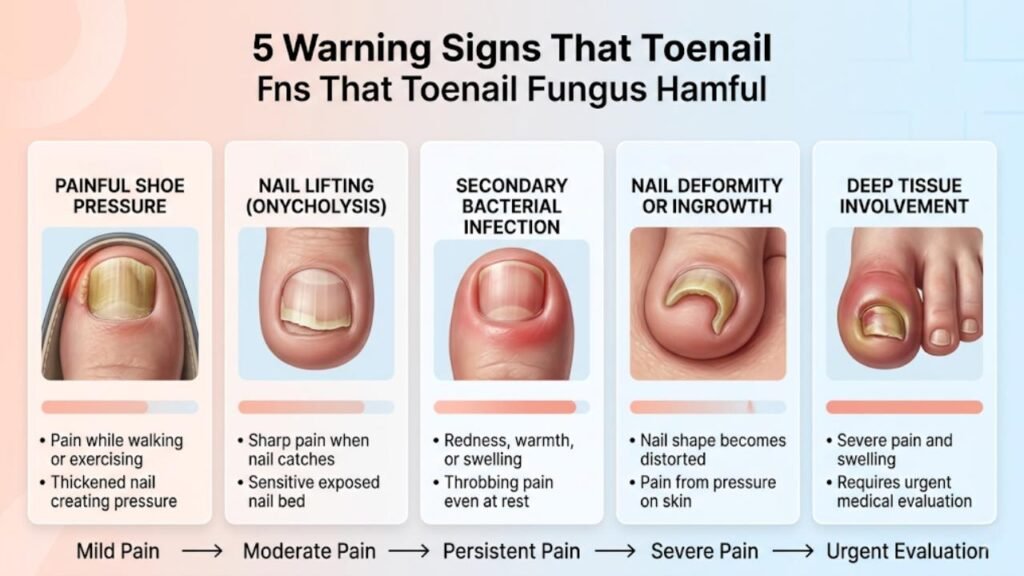
Warning Sign 1: Pain From Nail Pressure Inside Footwear
The most common and earliest type of pain that develops when toenail fungus becomes painful is pressure-related discomfort inside closed footwear.
As fungal infection advances, keratin debris accumulates in the subungual space — between the nail plate and the nail bed. This debris buildup progressively raises the nail plate, making the overall nail structure thicker and taller. In a closed shoe, this thickened nail now presses against the inner lining with every step, and that pressure is transmitted through the nail to the sensitive nail bed beneath.
What this feels like:
A dull aching or throbbing sensation in the affected toe during walking, standing, or physical activity. The pain is typically present in enclosed footwear and relieved when shoes are removed. Tight shoes, narrow toe boxes, and athletic footwear make this type of pain worse.
What it indicates:
The nail has thickened enough that it is no longer fitting comfortably within normal footwear. This typically indicates moderate to advanced nail infection with significant subungual debris accumulation.
What helps:
Footwear with a wider, deeper toe box reduces pressure. Professional nail debridement — thinning the nail using specialist instruments — provides significant immediate relief by reducing the physical bulk causing the pressure.
Warning Sign 2: Pain From Nail Lifting (Onycholysis)
When toenail fungus becomes painful through nail lifting, the pain is distinctly different from pressure pain — it is sharper and more sensitive because it involves exposed nail bed tissue.
Onycholysis describes the separation of the nail plate from the nail bed. As fungal organisms invade and multiply in the subungual space, they undermine the bond between the nail plate and the underlying nail bed. The nail gradually lifts — first at the tip, then extending further back toward the cuticle as infection progresses.
The nail bed that is exposed when the nail lifts is highly sensitive tissue with a rich nerve supply. It is not protected by the overlying nail plate anymore. This exposed surface is irritated by footwear, socks, temperature changes, and pressure during walking.
What this feels like:
Sharp pain or sensitivity in the area where the nail is lifting, particularly when the lifted nail edge catches on fabric — socks, bed sheets, carpet — or when the toe is pressed. Some patients describe a stinging or burning quality.
What it indicates:
Active fungal invasion is occurring in the subungual space. The nail-to-bed attachment is being disrupted. This level of structural involvement typically requires oral antifungal therapy rather than topical treatment alone.
What helps:
Keeping the lifted nail trimmed as short as is comfortable, protecting the toe from snagging with appropriate footwear, and starting effective antifungal treatment to stop further progression.
Warning Sign 3: Pain From Secondary Bacterial Infection
When toenail fungus becomes painful and the pain is accompanied by redness, warmth, swelling around the nail fold, or any fluid discharge, secondary bacterial infection needs to be considered seriously.
Fungal nail infection disrupts the normal seal that the nail plate and nail fold create against external bacteria. Gaps in this seal — from nail lifting, crumbling nail edges, or damaged nail fold skin — allow bacteria to enter the tissue surrounding and beneath the nail.
Secondary bacterial infection around the nail — paronychia — is painful in a distinctly different way from mechanical nail pain. It involves true tissue inflammation with the characteristic signs of infection: redness, warmth, swelling, and tenderness that is present even without any pressure on the nail.
What this feels like:
Throbbing, persistent pain that is present at rest — not just with footwear pressure. The surrounding skin feels tender even to light touch. The area may be visibly swollen, red, or warm. In more advanced bacterial infection, there may be fluid or pus visible at the nail fold margin.
What it indicates:
Secondary bacterial infection complicating the primary fungal infection. This is a more urgent situation than uncomplicated nail fungus. Bacterial infection in the nail fold can spread to surrounding tissue.
Why diabetic patients need to take this especially seriously:
Diabetic patients with peripheral neuropathy may not feel this pain despite having significant bacterial infection — because the nerve damage reduces sensation in the feet. In diabetic patients, even mild redness or swelling around an infected nail warrants prompt professional evaluation regardless of whether pain is present.
What helps:
This situation requires professional evaluation. Antifungal treatment addresses the underlying fungal infection, but the bacterial component may require antibiotic treatment. Self-treating a potentially infected nail fold with home remedies is not appropriate when signs of bacterial infection are present.
Warning Sign 4: Pain From Nail Deformity and Ingrowth
When toenail fungus becomes painful through deformity, the infection has been present long enough — or has caused severe enough structural changes — that the nail itself has changed shape in ways that create new sources of pressure and irritation.
Chronic fungal infection can produce several deformity patterns:
Nail thickening and curving — As the nail plate thickens and becomes structurally irregular, it may begin to curve in ways that press into the surrounding nail fold tissue. Severe curvature can produce pincer nail deformity — where the nail edges curl downward and compress the soft tissue beneath.
Ram’s horn appearance (onychogryphosis) — Long-standing severely neglected infection can produce extreme nail plate thickening and curling, creating a dramatically curved, horn-like structure that presses into surrounding tissue and makes footwear impossible to wear comfortably.
Fungal infection with ingrown nail — Structural changes from chronic infection can alter how the nail grows, increasing the tendency for nail edges to grow into the surrounding skin — a genuinely painful situation where the nail edge penetrates soft tissue.
What this feels like:
Persistent pressure pain with components of sharp pain when the deformed nail edge contacts surrounding tissue. The pain may be present even with very soft footwear or while bare. In ingrown nail situations, the pain is localized to the nail corner where the nail edge is penetrating skin.
What it indicates:
The infection has been established long enough and has caused sufficient structural damage to produce secondary nail deformity. This level of involvement almost always requires professional podiatric management — home nail trimming is not adequate and can worsen the situation.
Warning Sign 5: Pain That Indicates Deep Tissue Involvement
In the most advanced cases — or in vulnerable patients like those with diabetes or significant immune compromise — toenail fungus becomes painful in ways that indicate the infection has extended beyond the nail unit into deeper tissues.
This is not common in otherwise healthy adults with typical nail fungal infections. But it represents the most serious end of the spectrum and the situation where seeking urgent professional care is most important.
Signs that suggest deeper tissue involvement:
- Pain that is severe and present at rest, not just with activity or pressure
- Significant swelling extending beyond the toe — toward the foot itself
- Red streaks extending from the affected toe
- Fever or general feeling of illness accompanying the nail pain
- Inability to bear weight on the affected foot
These signs suggest cellulitis — a bacterial skin infection that has spread from the nail area — or in very rare and serious cases, deeper tissue infection. In diabetic patients, this can escalate more quickly and with less obvious warning than in non-diabetic patients.
This level of situation requires urgent medical attention — not a scheduled appointment but same-day or emergency evaluation.
The Connection Between Toenail Fungus Pain and Progression
The 5 warning signs above follow a general pattern that mirrors the infection’s progression:
| Stage | Pain Type | Severity | Urgency |
|---|---|---|---|
| Mild infection | No pain | None | Treat soon — easier when early |
| Moderate infection | Pressure pain in footwear | Mild to moderate | Professional evaluation appropriate |
| Advanced infection | Nail lifting pain and footwear pain | Moderate | Professional care needed |
| Complicated infection | Secondary bacterial infection pain | Moderate to severe | Prompt professional evaluation |
| Severe/deformed nail | Deformity pain, possible deep tissue | Severe | Urgent professional care |
The most important clinical point: toenail fungus becomes painful only at moderate to advanced stages. Pain is not an early warning — it is a late one. By the time the nail hurts, the infection is already well established and requires more intensive treatment than it would have needed months earlier.
Who Is Most at Risk When Toenail Fungus Becomes Painful?
While anyone with advanced nail fungus can develop pain, certain people face both higher likelihood of developing painful complications and higher risk from those complications when they occur.
Diabetic patients
The combination of neuropathy and vascular disease in diabetes creates a dangerous situation. Neuropathy means that pain may be absent or reduced even when the infection is significantly advanced. A diabetic patient may have secondary bacterial infection, nail bed involvement, or deep tissue complications without experiencing the warning pain that would alert a non-diabetic patient. Regular professional foot inspection — not just self-examination — is essential for diabetic patients with nail infections.
Elderly patients
Slow nail growth, reduced circulation, thicker nails, and reduced immune function all contribute to infections becoming more severe before they are addressed. Elderly patients often have limited flexibility for self-examination of their feet, meaning changes in nail infection severity may be missed until they are already causing significant problems.
Patients with peripheral vascular disease
Poor blood flow reduces the pain response in the extremities and slows healing. Complications from infected nails — including secondary bacterial infection — can progress faster in patients with poor circulation.
Patients on immunosuppressive medications
These patients may develop more extensive infection more quickly, and secondary complications may escalate faster than in immunocompetent patients.
Treatment When Toenail Fungus Becomes Painful
When toenail fungus becomes painful, treatment needs to address two things simultaneously — the pain itself and the underlying infection causing it.

Professional Nail Debridement for Immediate Relief
Professional nail debridement — thinning and reducing the nail using specialist instruments in a podiatry setting — is the most immediate and effective intervention for pressure-related pain from thickened nails.
A podiatrist uses a rotary burr or specialized nippers to safely reduce the nail thickness, remove subungual debris, and trim the nail to a comfortable level. The immediate reduction in nail bulk removes the pressure being transmitted to the nail bed, often providing significant pain relief within hours.
Debridement does not treat the fungal infection itself — it addresses the structural consequence causing the pain. It should be combined with appropriate antifungal medication.
Antifungal Medication Matched to Severity
When toenail fungus has become painful, the infection is almost always at a stage that requires oral antifungal therapy rather than topical treatment alone.
Oral terbinafine — first-line for dermatophyte infections — reaches the nail through the bloodstream and treats the infection from within. It is more effective than topical therapy for the deeper, established infection that produces painful nail changes. Standard course is 12 weeks, with nail improvement continuing for many months as new healthy nail grows in.
Managing Secondary Bacterial Infection
When secondary bacterial infection is suspected — based on signs of redness, swelling, warmth, or discharge around the nail — your doctor will evaluate whether antibiotic treatment is needed alongside antifungal therapy.
Do not attempt to treat suspected nail fold infection at home with over-the-counter products. This requires professional assessment to determine whether antibiotics are necessary and which ones are appropriate.
Footwear Adjustment During Treatment
While antifungal treatment takes effect over weeks and months, practical footwear management reduces ongoing pain during that period.
- Choose footwear with a wide, deep toe box that does not press on the affected nails
- Avoid pointed-toe or tight-fitting shoes entirely during treatment
- Open-toed footwear when appropriate for the season reduces pressure significantly
- Cushioned socks reduce friction on sensitive nail areas
- Specialist padding from a podiatrist can be used to offload pressure from particularly painful areas
Preventing Toenail Fungus From Becoming Painful
The simplest way to prevent toenail fungus from becoming painful is to treat it before it reaches the stages where pain develops.
Treat early discoloration seriously
Any nail discoloration that persists beyond 4 to 6 weeks without a clear cause warrants professional evaluation. Early-stage nail fungus can be treated with topical antifungal therapy before the infection is established enough to cause structural damage and pain.
Do not wait for pain as your signal to act
Because toenail fungus is painless in its early stages, patients who wait for pain to develop are guaranteed to be seeking treatment at a more advanced stage than necessary. Use visual changes — not pain — as your trigger for action.
Complete full treatment courses
Stopping antifungal treatment early because the nail looks better leaves residual infection that continues progressing, potentially reaching the painful stage despite an apparently improving nail appearance.
For high-risk patients — regular professional monitoring
Diabetic patients, elderly patients, and those with immune or circulatory compromise should have their feet and nails examined by a podiatrist regularly — not just when they notice a problem. In these groups, problems can advance significantly before being noticed.
Frequently Asked Questions
Why does toenail fungus become painful after being painless for so long?
Toenail fungus is painless when it is in the nail plate, which has no nerve supply. Pain develops when the infection causes enough thickening to press on the nail bed, when the nail lifts and exposes sensitive tissue, or when secondary bacterial infection develops. These changes take months of progression to occur.
Is pain a sign that toenail fungus has become serious?
Yes. When toenail fungus becomes painful, it indicates the infection has advanced to the point of causing structural nail damage. Pain is a late warning sign — it means the infection has been progressing for some time and now requires prompt professional attention.
Can I treat painful toenail fungus at home?
Home care — over-the-counter antifungal products, proper footwear, keeping the nail trimmed — can manage very mild cases. Once toenail fungus has become painful, professional evaluation is strongly recommended. Painful nail fungus almost always indicates a stage of infection that requires prescription treatment and often professional debridement.
Should I be worried about toenail fungus pain if I have diabetes?
Yes — but also aware that pain may not be a reliable warning for diabetic patients. Peripheral neuropathy can reduce or eliminate pain signals even when infection is serious. Diabetic patients should rely on regular professional foot examinations rather than waiting for pain to indicate a problem.
How long does it take for pain to improve with treatment?
Pain from nail pressure often improves quickly after professional debridement — within days as nail thickness is reduced. The underlying infection takes months to clear with antifungal medication. If secondary bacterial infection is present, antibiotic treatment produces improvement in the acute bacterial pain within days, while the nail fungus itself requires the longer antifungal course.
When should I go to a doctor urgently for painful toenail fungus?
Seek urgent evaluation if you notice pain at rest (not just with pressure), significant swelling extending beyond the toe, red streaks extending from the nail area, fever, or inability to walk. These signs may indicate secondary bacterial infection that has spread and requires prompt medical attention.
Summary
Toenail fungus becomes painful when the infection has progressed from a superficial nail plate change to a stage involving significant structural damage, nail bed involvement, or complications such as secondary bacterial infection. Five warning signs mark this progression: pressure pain from nail thickening, sharp pain from nail lifting, bacterial infection pain with redness and swelling, deformity pain from structurally changed nails, and deep tissue pain indicating serious complications.
Pain in nail fungal infection is never an early sign — it is always a late one. Patients who wait for pain before seeking treatment consistently present at more advanced stages that require more intensive treatment and take longer to recover. Using visible changes — discoloration, surface texture, thickening — as the trigger for early professional evaluation prevents most patients from ever reaching the painful stage.
When toenail fungus has become painful, professional podiatric care is needed. Debridement for immediate pain relief, matched antifungal therapy for the infection, and appropriate management of any bacterial complications are the three pillars of care at this stage.
Struggling to get an appointment?
We help patients in your area bypass clinic waitlists by instantly finding verified podiatry doctors who accept their insurance.