When Nail Deformities Signal Systemic Disease
Find a Podiatrist Near You
Get same-day appointments with verified podiatrists. Insurance accepted.
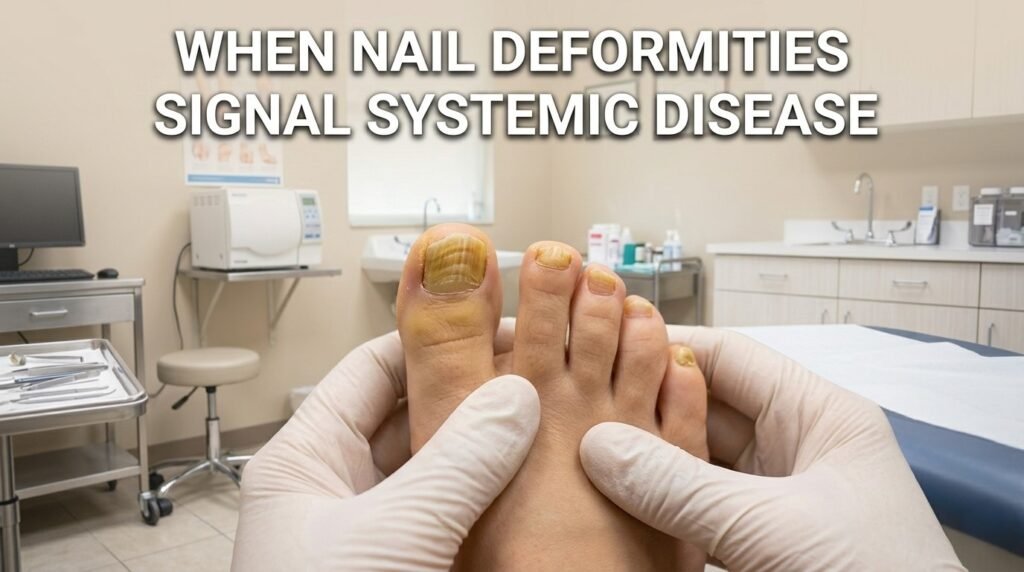
Nail deformities signal systemic disease in ways that are surprisingly specific — specific enough that clinicians use nail examination as a routine part of assessing patients for cardiovascular, pulmonary, endocrine, and autoimmune conditions. The thick nails are visible, accessible, and structurally connected to systemic physiology through blood supply, nutrition, and immune function. When something goes wrong internally, the nails often reflect it before symptoms become obvious elsewhere.
Most patients notice nail changes and assume they are cosmetic — the result of aging, minor trauma, or dry conditions. This assumption is usually correct. But certain nail changes, particularly when they develop without obvious local cause, persist despite nail care, or occur alongside other symptoms, carry real diagnostic significance. Knowing which nail changes warrant further investigation could be genuinely important for health outcomes.
This guide explains the seven most clinically significant nail deformities that signal systemic disease — what each looks like, what conditions it is associated with, how urgently it warrants evaluation, and what other symptoms may accompany it.
Why Nails Reflect Internal Health
The nail matrix — the growth center beneath the cuticle — is metabolically active tissue. It produces nail plate cells continuously and is entirely dependent on blood supply, nutrition, and immune function delivered through the circulation.
Any significant disruption in these systemic inputs produces changes in nail production:
- Nutritional deficiencies alter the chemical composition of the nail plate
- Oxygen deprivation from cardiovascular or pulmonary conditions affects matrix metabolism
- Systemic inflammation alters nail cell turnover and matrix behavior
- Immune-mediated disease can directly target nail unit tissue
- Hormonal changes affect keratin production and nail growth rate
The resulting nail changes are not random — they follow predictable patterns that correspond to specific physiological disruptions. This is why certain nail findings have strong and documented associations with specific systemic conditions.
7 Nail Deformities That Signal Systemic Disease
1. Nail Clubbing — A Serious Systemic Warning
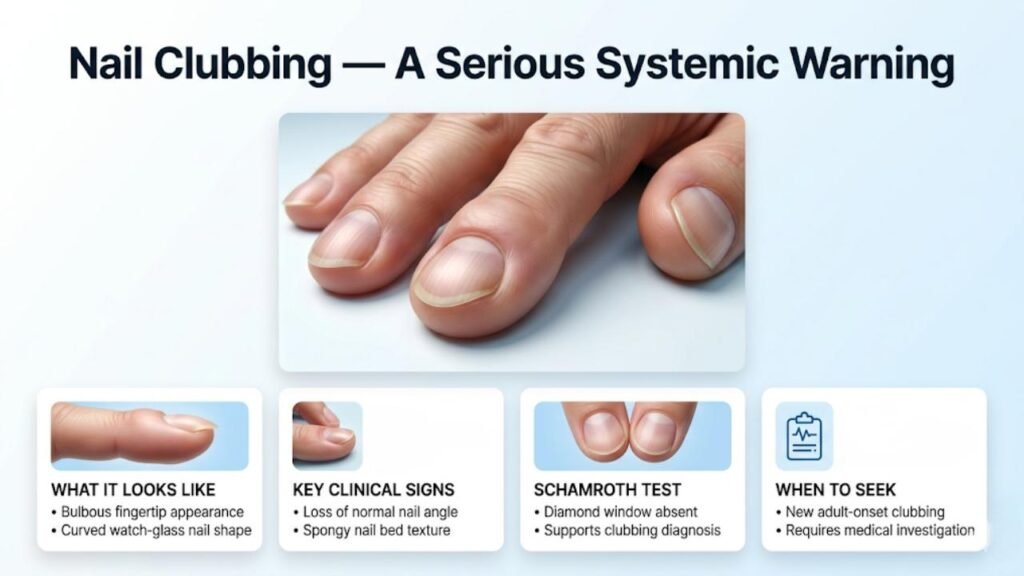
Nail clubbing is the most clinically significant of all nail changes that signal systemic disease. Its presence — particularly when it appears in an adult who did not previously have it — is considered a red flag warranting thorough medical investigation.
What clubbing looks like:
- The fingertip becomes enlarged and rounded — bulbous in appearance
- The nail curves downward over the rounded fingertip, taking on a “watch glass” appearance
- The normal angle between the nail and the nail fold at the base is lost — instead of the normal angle less than 180 degrees, the nail meets the skin at a flattened or reversed angle
- The nail bed feels spongy when pressed — soft and compressible rather than firm against bone
- Typically affects all fingers and often all toes symmetrically
The Schamroth test: Placing corresponding fingernails from both hands face-to-face should produce a small diamond-shaped window at the cuticle junction. In clubbing, this window is absent because the nail angle has changed.
Systemic diseases associated with nail clubbing:
Pulmonary causes (most common in adults):
- Lung cancer — the most important association; new clubbing in an adult smoker or at-risk patient requires urgent chest imaging
- Chronic obstructive pulmonary disease (COPD) in advanced stages
- Idiopathic pulmonary fibrosis
- Bronchiectasis
- Cystic fibrosis
- Mesothelioma
Cardiovascular causes:
- Congenital heart disease — particularly cyanotic types (most common in children)
- Infective endocarditis (heart valve infection)
- Atrial myxoma
Gastrointestinal causes:
- Crohn’s disease and ulcerative colitis
- Liver cirrhosis
- Celiac disease (less commonly)
Urgency level: High. New clubbing in an adult without a known cause should prompt physician evaluation and chest imaging within weeks, not months. It can be the first sign of lung malignancy.
2. Koilonychia (Spoon Nails) — Iron and Nutritional Signal
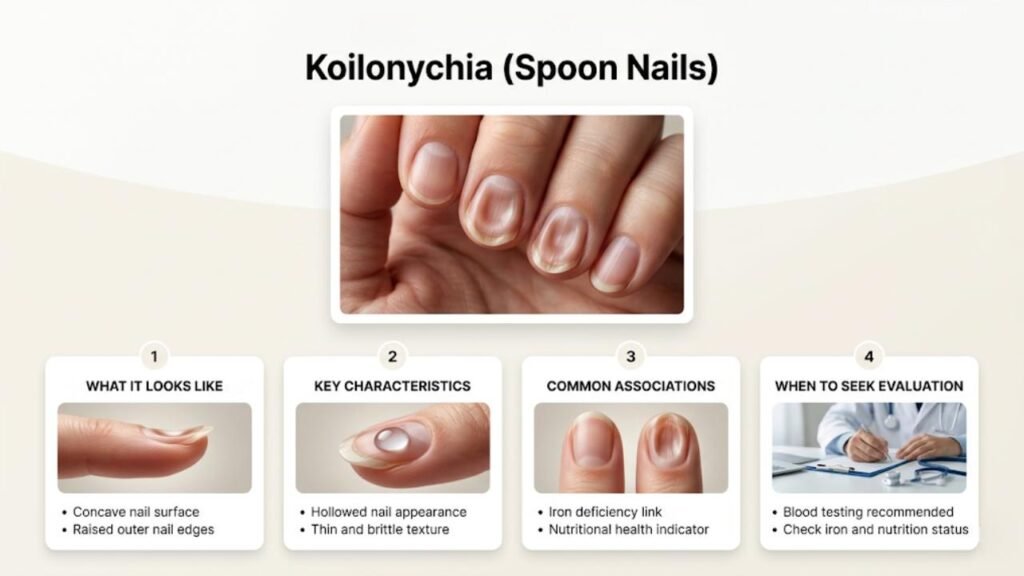
Koilonychia describes a nail shape where the normal gentle downward curve of the nail is replaced by an upward curve at the edges — the nail becomes concave, resembling a spoon. The central portion of the nail dips while the edges rise.
What koilonychia looks like:
- The nail has a concave, hollowed-out appearance when viewed from the side
- In significant cases, a small water droplet placed on the nail will not fall off — the nail cup holds it
- The nail may also be thin, brittle, and slightly opaque
- Most commonly affects the fingernails, though toenails can also be involved
Systemic diseases associated with koilonychia:
Iron deficiency anemia — The most common association. The exact mechanism is not fully established but may involve changes in keratin production when iron-dependent enzymes are insufficient.
Hemochromatosis — Hereditary iron overload; the nail changes in hemochromatosis may reflect the tissue effects of iron accumulation.
Hypothyroidism — Underactive thyroid can produce nail changes including koilonychia alongside other nail findings.
Raynaud’s phenomenon — Episodic vascular spasm affecting peripheral circulation.
Occupational chemical exposure — Petroleum-based chemicals have been associated with acquired koilonychia.
Urgency level: Moderate. Koilonychia warrants blood testing — at minimum a full blood count and iron studies — to assess for iron deficiency and other nutritional deficiencies. It does not require emergency evaluation but should not be indefinitely deferred.
3. Beau’s Lines — Temporary System Shutdown Marker
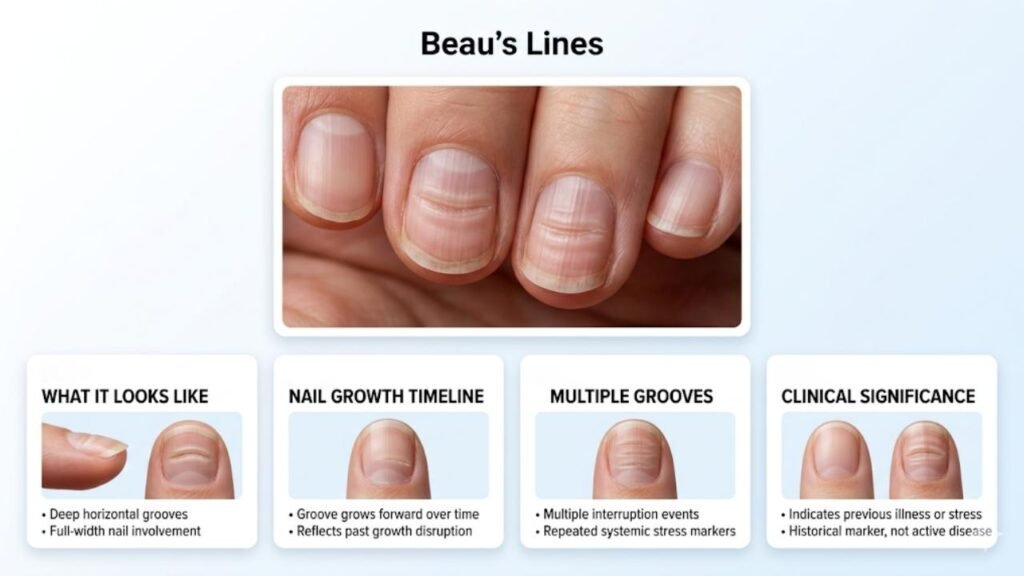
Beau’s lines are deep horizontal grooves that run across the nail plate. They represent a temporary, significant disruption to nail matrix function — essentially a pause in normal nail production that leaves a groove in the nail marking the point at which production was disrupted.
What Beau’s lines look like:
- Deep horizontal grooves running across the full width of the nail
- Present in the same location on all nails if the systemic event was widespread
- The groove moves forward as the nail grows — its position relative to the cuticle tells you approximately when the event occurred (nails grow approximately 1.5 mm per month, so a groove midway up the nail indicates disruption approximately 5 to 7 months ago)
- Multiple parallel grooves indicate multiple disruption events
- The nail surface behind the groove (new nail) and ahead of it (older nail) may look relatively normal
Systemic events associated with Beau’s lines:
Beau’s lines indicate that something was severe enough to significantly disrupt matrix function for a period. Common causes include:
- Severe illness — major infections, sepsis, hospitalization
- Chemotherapy — cytotoxic medications reliably produce Beau’s lines
- Major surgery — particularly cardiac surgery
- Severe metabolic disturbance — including diabetic crises
- Thyroid disorders — both hypo and hyperthyroidism
- Significant psychological or physiological stress events
Urgency level: Beau’s lines themselves are a historical marker — they tell you something significant happened, not that something dangerous is happening now. Their clinical value is in identifying that a significant systemic event occurred, helping piece together a patient’s recent health history. If the cause is unknown, investigation is warranted.
4. Yellow Nail Syndrome — Lymphatic and Respiratory Signal
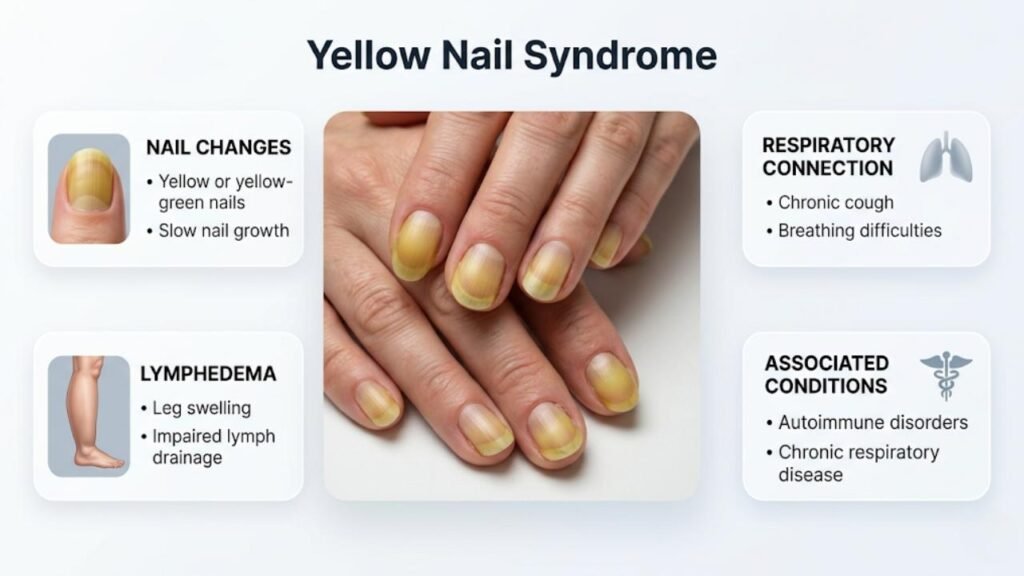
Yellow nail syndrome is a relatively rare but distinctive combination of nail, respiratory, and lymphatic findings. When all three components are present, the combination is highly specific for the condition.
What yellow nail syndrome looks like:
- Nails are markedly yellow or yellow-green in color
- Nails grow extremely slowly — sometimes appearing to stop growing altogether
- Nails thicken and develop an exaggerated lateral curvature
- The cuticle is absent
- Nails may lift from the nail bed
The systemic diseases associated with yellow nail syndrome:
Yellow nail syndrome is associated with:
- Chronic respiratory conditions — chronic bronchitis, bronchiectasis, pleural effusion, sinusitis
- Lymphedema — impaired lymphatic drainage producing swelling, often of the legs
- Autoimmune conditions — rheumatoid arthritis, lupus, thyroid disease have been associated
Urgency level: Moderate to high, particularly if the nail changes are accompanied by respiratory symptoms (chronic cough, breathlessness) or lower limb swelling. These findings together warrant respiratory and lymphatic evaluation.
5. Splinter Hemorrhages — Vascular and Cardiac Warning
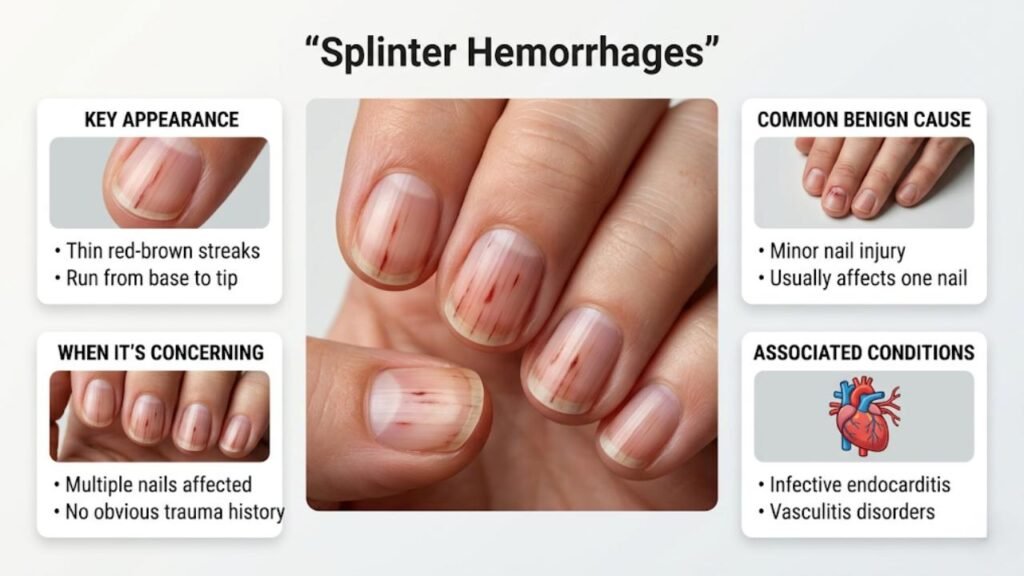
Splinter hemorrhages are thin, linear reddish-brown streaks running longitudinally (from base to tip) beneath the nail plate. They look like tiny splinters of wood beneath the nail — hence the name.
What splinter hemorrhages look like:
- Thin red, dark red, or brown longitudinal lines beneath the nail
- Located in the mid-nail or distal nail — proximal (cuticle-end) splinter hemorrhages are more concerning
- Can occur in one or multiple nails
- Do not move with nail growth in the way that other nail findings do — they are fixed within the nail plate
Important context:
Splinter hemorrhages from minor trauma are common — many healthy people develop one or two splinter hemorrhages from everyday hand and nail impacts. Traumatic splinter hemorrhages are typically single, in one nail, and have an obvious associated mechanical explanation.
The clinically significant pattern is multiple, simultaneous splinter hemorrhages in multiple nails without a traumatic explanation, particularly in the proximal nail area.
Systemic diseases associated with pathological splinter hemorrhages:
- Infective endocarditis — bacterial infection of heart valves; splinter hemorrhages are a classic clinical finding in this serious condition
- Vasculitis — inflammation of blood vessel walls from various causes
- Antiphospholipid syndrome — an autoimmune clotting disorder
- Septic emboli — fragments of infected material circulating in the bloodstream
Urgency level: High for multiple unexplained splinter hemorrhages in multiple nails. Infective endocarditis is a serious, potentially fatal condition if untreated. New fever, joint pain, or general illness alongside unexplained splinter hemorrhages warrants same-day medical evaluation.
6. Nail Pitting — Immune and Inflammatory Signal
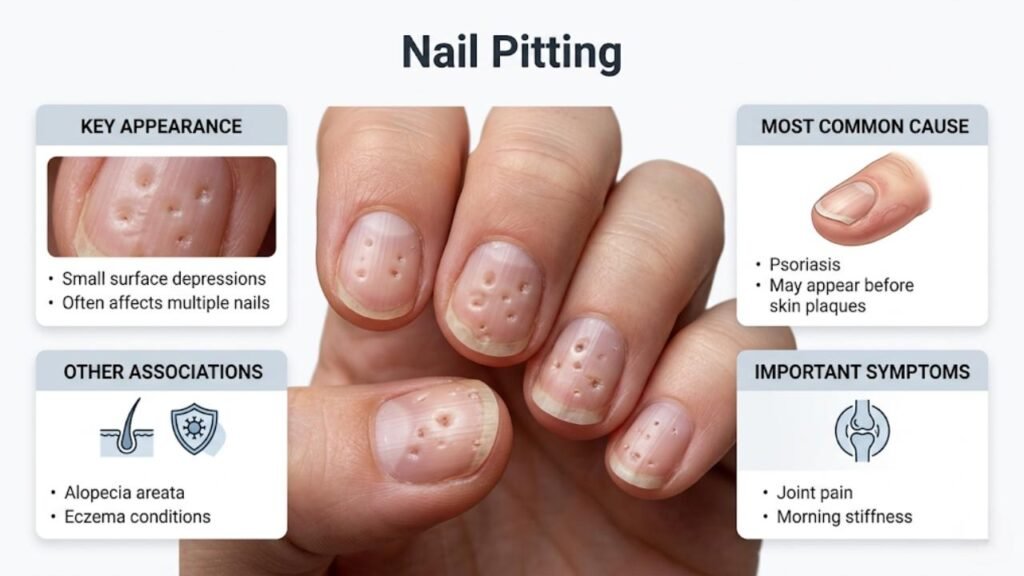
Nail pitting describes small, regular depressions on the nail surface — appearing as if the nail has been pricked multiple times with a fine implement. The pits reflect disruption of the proximal nail matrix (the part closest to the cuticle that forms the top surface of the nail plate).
What nail pitting looks like:
- Multiple small, shallow or deep depressions scattered across the nail surface
- Can be fine and regular, or larger and irregular depending on the condition
- Typically affects multiple nails
- Often accompanied by other nail changes in the same condition
Systemic diseases associated with nail pitting:
Psoriasis — The most common cause. Nail pitting is present in 50 to 80 percent of patients with psoriasis and can precede skin plaques. When nail pitting signal systemic disease in this context, the associated condition is psoriasis — which itself is associated with psoriatic arthritis, an inflammatory joint condition.
Alopecia areata — An autoimmune condition producing patchy hair loss; nail pitting is a recognized associated finding.
Eczema and atopic conditions — Can produce nail pitting less commonly.
Reactive arthritis — A form of arthritis triggered by infection; nail pitting can be a feature.
Urgency level: Moderate. Nail pitting warrants dermatology evaluation to confirm or exclude psoriasis, and any joint pain, stiffness, or swelling occurring alongside nail pitting should prompt rheumatology evaluation for psoriatic arthritis.
7. Muehrcke’s Lines and Terry’s Nails — Metabolic and Hepatic Signals
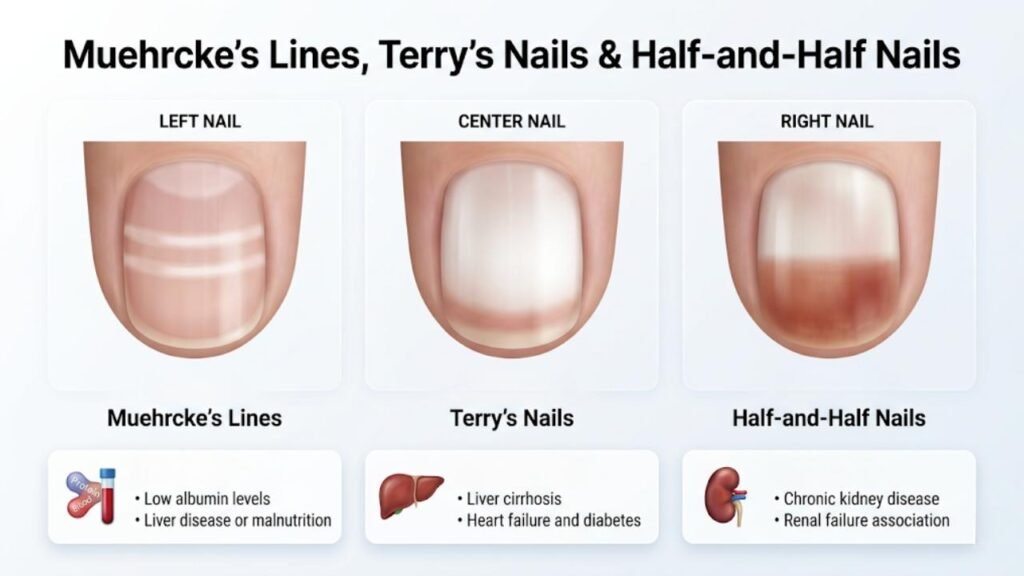
These two specific nail findings are associated with metabolic and protein-related systemic conditions.
Muehrcke’s lines:
- Paired, white, horizontal bands running across the nail parallel to the nail fold
- The bands are in pairs and do not move with nail growth — they are not in the nail plate itself but in the nail bed
- Pressing on the nail blanches the nail bed and temporarily makes the lines disappear, confirming they are in the vascular nail bed rather than the nail plate
- Associated with: hypoalbuminemia (low blood protein) — from nephrotic syndrome, liver disease, or malnutrition
Terry’s nails:
- The nail appears almost entirely white, with only a narrow band of normal pinkish nail at the far tip
- The white portion reflects changes in the nail bed vasculature rather than the nail plate
- Associated with: liver cirrhosis (the most classic association), congestive heart failure, type 2 diabetes, hypoalbuminemia
Half-and-half nails (Lindsay’s nails):
- The proximal (base) half of the nail is white and the distal (tip) half is brown or red
- Associated with: chronic kidney disease — present in approximately 10 to 40 percent of patients with renal failure
Urgency level for these findings: Moderate to high, depending on associated symptoms. Muehrcke’s lines, Terry’s nails, and half-and-half nails all warrant blood testing for protein levels, liver function, and kidney function. The presence of these findings is a prompt for investigation rather than an emergency in isolation.
Key Principles for When Nail Changes Signal Systemic Disease
Not every nail change indicates internal disease. Understanding which features increase the probability that nail deformities signal systemic disease helps patients make informed decisions about when to seek evaluation.
Features that increase clinical concern:
- Multiple nails affected simultaneously — Local causes (trauma, fungal infection) typically start in one nail. Systemic causes tend to affect multiple nails because the underlying factor is systemic.
- Bilateral symmetry — Changes that appear in the same pattern on both feet, or both hands, are more likely to reflect a systemic process.
- No obvious local explanation — A nail change that appears without any history of trauma, new footwear, or infection exposure more readily points to a systemic cause.
- Associated symptoms elsewhere — Fatigue, shortness of breath, joint pain, swelling, weight loss, or skin changes occurring alongside nail deformities raise the probability of systemic disease significantly.
- Rapidly developing changes — Nail changes that appear or worsen quickly (weeks rather than months) are more concerning than gradually developing changes.
- Negative local testing — Negative fungal testing combined with persistent nail changes redirects attention to non-local causes.
What to Do When Nail Deformities Signal Systemic Disease
Step 1: Document the nail change
Take clear photographs of the affected nails in good lighting. Note when the change first appeared, whether it is getting worse or better, and whether any other symptoms are present.
Step 2: Note associated symptoms
Breathlessness, persistent cough, joint pain or swelling, swelling of the legs, fatigue, fever, or unexplained weight loss alongside nail changes increase the urgency of evaluation.
Step 3: See a podiatrist or primary care physician
A podiatrist can assess nail health, perform fungal testing to rule out local infection, and recognize signs that suggest systemic causes warranting referral. A primary care physician provides the broader systemic assessment — blood tests, imaging, specialist referral — when nail changes suggest internal disease.
Step 4: Do not self-treat without a diagnosis
Applying antifungal products, assuming the change is cosmetic, or waiting to see if changes resolve without evaluation delays diagnosis when nail deformities signal systemic disease.
Frequently Asked Questions
Can nail changes really indicate serious internal disease?
Yes. Specific nail findings — clubbing, spoon nails, Beau’s lines, splinter hemorrhages, and others — have well-established and documented associations with systemic conditions including lung cancer, heart valve infection, anemia, liver disease, and kidney failure. These associations are used clinically by physicians as diagnostic clues.
Which nail changes are most urgent to evaluate?
Nail clubbing and multiple unexplained splinter hemorrhages in multiple nails are the most urgent findings. Both can indicate serious conditions — lung malignancy and infective endocarditis respectively — that benefit from rapid investigation and treatment.
Do all thick or changed nails indicate systemic disease?
No. Most nail thickening is caused by fungal infection, trauma, or aging — none of which indicate systemic disease. The nail changes described in this guide are specific findings with patterns that differ from common local nail conditions. Laboratory testing and clinical context determine which category a given nail change falls into.
If my nail change turns out to be systemic, will the nail improve with treatment?
Often yes — when the underlying systemic condition is effectively treated, the nail matrix may return to more normal function and new nail growing from the base will progressively look healthier. However, the nail plate takes 9 to 18 months to fully replace, so improvement is slow even after successful systemic treatment.
Should I see a podiatrist or my doctor when I notice unusual nail changes?
Either is a reasonable starting point. A podiatrist can examine nail health, rule out local causes through testing, and recognize when systemic causes are more likely. Your primary care physician conducts the broader systemic investigation when systemic disease is suspected. For concerning patterns — clubbing, multiple splinter hemorrhages, or nail changes with systemic symptoms — your primary care physician or emergency department (for acute presentations) is the priority.
Can nail changes from systemic disease be mistaken for fungal infection?
Yes — frequently. Yellow discoloration, nail thickening, and texture changes from systemic conditions can look very similar to fungal nail infection. This is why laboratory testing before treating any nail condition is clinically important — treating nail psoriasis, yellow nail syndrome, or Terry’s nails with antifungal medication produces no benefit and delays proper diagnosis.
Summary
Nail deformities signal systemic disease through seven specific nail findings — clubbing, koilonychia, Beau’s lines, yellow nail syndrome, splinter hemorrhages, nail pitting, and specific vascular nail bed patterns including Muehrcke’s lines, Terry’s nails, and half-and-half nails. Each has documented associations with specific internal conditions ranging from iron deficiency and psoriasis to lung cancer and heart valve infection.
Not every nail change signals internal disease — most nail problems have local causes. But when nail changes affect multiple nails symmetrically, appear without an obvious local explanation, develop rapidly, or occur alongside systemic symptoms, professional evaluation that looks beyond the nail itself is warranted.
The nails are genuinely a window to internal health. Paying attention to specific patterns — and seeking evaluation when those patterns match the ones described above — can contribute to earlier diagnosis of conditions that benefit substantially from timely detection.
Struggling to get an appointment?
We help patients in your area bypass clinic waitlists by instantly finding verified podiatry doctors who accept their insurance.